Inhaltsverzeichnis
- Einleitung und ?berblick
- Anwendungsbereich
- Rechtsgrundlagen
- Kontaktdaten des Verantwortlichen
- Speicherdauer
- Rechte laut Datenschutz-Grundverordnung
- Daten?bertragung in Drittl?nder
- Sicherheit der Datenverarbeitung
- Kommunikation
- Auftragsverarbeitungsvertrag (AVV)
- Cookies
- Webhosting Einleitung
- Web Analytics Einleitung
- Messenger & Kommunikation Einleitung
- Chatbots Einleitung
- Online-Marketing Einleitung
- Erkl?rung verwendeter Begriffe
- Schlusswort
Einleitung und ?berblick
Wir haben diese Datenschutzerkl?rung (Fassung 11.11.2022-122317514) verfasst, um Ihnen gem?? der Vorgaben der Datenschutz-Grundverordnung (EU) 2016/679 und anwendbaren nationalen Gesetzen zu erkl?ren, welche personenbezogenen Daten (kurz Daten) wir als Verantwortliche ? und die von uns beauftragten Auftragsverarbeiter (z. B. Provider) ? verarbeiten, zuk?nftig verarbeiten werden und welche rechtm??igen M?glichkeiten Sie haben. Die verwendeten Begriffe sind geschlechtsneutral zu verstehen.
Kurz gesagt: Wir informieren Sie umfassend ?ber Daten, die wir ?ber Sie verarbeiten.
Datenschutzerkl?rungen klingen f?r gew?hnlich sehr technisch und verwenden juristische Fachbegriffe. Diese Datenschutzerkl?rung soll Ihnen hingegen die wichtigsten Dinge so einfach und transparent wie m?glich beschreiben. Soweit es der Transparenz f?rderlich ist, werden technische Begriffe leserfreundlich erkl?rt, Links zu weiterf?hrenden Informationen geboten und Grafiken zum Einsatz gebracht. Wir informieren damit in klarer und einfacher Sprache, dass wir im Rahmen unserer Gesch?ftst?tigkeiten nur dann personenbezogene Daten verarbeiten, wenn eine entsprechende gesetzliche Grundlage gegeben ist. Das ist sicher nicht m?glich, wenn man m?glichst knappe, unklare und juristisch-technische Erkl?rungen abgibt, so wie sie im Internet oft Standard sind, wenn es um Datenschutz geht. Ich hoffe, Sie finden die folgenden Erl?uterungen interessant und informativ und vielleicht ist die eine oder andere Information dabei, die Sie noch nicht kannten.
Wenn trotzdem Fragen bleiben, m?chten wir Sie bitten, sich an die unten bzw. im Impressum genannte verantwortliche Stelle zu wenden, den vorhandenen Links zu folgen und sich weitere Informationen auf Drittseiten anzusehen. Unsere Kontaktdaten finden Sie selbstverst?ndlich auch im Impressum.
Anwendungsbereich
Diese Datenschutzerkl?rung gilt f?r alle von uns im Unternehmen verarbeiteten personenbezogenen Daten und f?r alle personenbezogenen Daten, die von uns beauftragte Firmen (Auftragsverarbeiter) verarbeiten. Mit personenbezogenen Daten meinen wir Informationen im Sinne des Art. 4 Nr. 1 DSGVO wie zum Beispiel Name, E-Mail-Adresse und postalische Anschrift einer Person. Die Verarbeitung personenbezogener Daten sorgt daf?r, dass wir unsere Dienstleistungen und Produkte anbieten und abrechnen k?nnen, sei es online oder offline. Der Anwendungsbereich dieser Datenschutzerkl?rung umfasst:
- alle Onlineauftritte (Websites, Onlineshops), die wir betreiben
- Social Media Auftritte und E-Mail-Kommunikation
- mobile Apps f?r Smartphones und andere Ger?te
Kurz gesagt: Die Datenschutzerkl?rung gilt f?r alle Bereiche, in denen personenbezogene Daten im Unternehmen ?ber die genannten Kan?le strukturiert verarbeitet werden. Sollten wir au?erhalb dieser Kan?le mit Ihnen in Rechtsbeziehungen eintreten, werden wir Sie gegebenenfalls gesondert informieren.
Rechtsgrundlagen
In der folgenden Datenschutzerkl?rung geben wir Ihnen transparente Informationen zu den rechtlichen Grunds?tzen und Vorschriften, also den Rechtsgrundlagen der Datenschutz-Grundverordnung, die uns erm?glichen, personenbezogene Daten zu verarbeiten.
Was das EU-Recht betrifft, beziehen wir uns auf die VERORDNUNG (EU) 2016/679 DES EUROP?ISCHEN PARLAMENTS UND DES RATES vom 27. April 2016. Diese Datenschutz-Grundverordnung der EU k?nnen Sie selbstverst?ndlich online auf EUR-Lex, dem Zugang zum EU-Recht, unter https://eur-lex.europa.eu/legal-content/DE/ALL/?uri=celex%3A32016R0679 nachlesen.
Wir verarbeiten Ihre Daten nur, wenn mindestens eine der folgenden Bedingungen zutrifft:
- Einwilligung (Artikel 6 Absatz 1 lit. a DSGVO): Sie haben uns Ihre Einwilligung gegeben, Daten zu einem bestimmten Zweck zu verarbeiten. Ein Beispiel w?re die Speicherung Ihrer eingegebenen Daten eines Kontaktformulars.
- Vertrag (Artikel 6 Absatz 1 lit. b DSGVO): Um einen Vertrag oder vorvertragliche Verpflichtungen mit Ihnen zu erf?llen, verarbeiten wir Ihre Daten. Wenn wir zum Beispiel einen Kaufvertrag mit Ihnen abschlie?en, ben?tigen wir vorab personenbezogene Informationen.
- Rechtliche Verpflichtung (Artikel 6 Absatz 1 lit. c DSGVO): Wenn wir einer rechtlichen Verpflichtung unterliegen, verarbeiten wir Ihre Daten. Zum Beispiel sind wir gesetzlich verpflichtet Rechnungen f?r die Buchhaltung aufzuheben. Diese enthalten in der Regel personenbezogene Daten.
- Berechtigte Interessen (Artikel 6 Absatz 1 lit. f DSGVO): Im Falle berechtigter Interessen, die Ihre Grundrechte nicht einschr?nken, behalten wir uns die Verarbeitung personenbezogener Daten vor. Wir m?ssen zum Beispiel gewisse Daten verarbeiten, um unsere Website sicher und wirtschaftlich effizient betreiben zu k?nnen. Diese Verarbeitung ist somit ein berechtigtes Interesse.
Weitere Bedingungen wie die Wahrnehmung von Aufnahmen im ?ffentlichen Interesse und Aus?bung ?ffentlicher Gewalt sowie dem Schutz lebenswichtiger Interessen treten bei uns in der Regel nicht auf. Soweit eine solche Rechtsgrundlage doch einschl?gig sein sollte, wird diese an der entsprechenden Stelle ausgewiesen.
Zus?tzlich zu der EU-Verordnung gelten auch noch nationale Gesetze:
- In ?sterreich ist dies das Bundesgesetz zum Schutz nat?rlicher Personen bei der Verarbeitung personenbezogener Daten (Datenschutzgesetz), kurz DSG.
- In Deutschland gilt das Bundesdatenschutzgesetz, kurz BDSG.
Sofern weitere regionale oder nationale Gesetze zur Anwendung kommen, informieren wir Sie in den folgenden Abschnitten dar?ber.
Kontaktdaten des Verantwortlichen
Sollten Sie Fragen zum Datenschutz oder zur Verarbeitung personenbezogener Daten haben, finden Sie nachfolgend die Kontaktdaten der verantwortlichen Person bzw. Stelle:
Katharina Alber
Larch 3a, 6071 Aldrans, ?sterreich
?sterreich
Vertretungsberechtigt: Katharina Alber
E-Mail: piano@boogiekathi.com
Telefon: +43 676 960 8543
Impressum: https://www.boogiekathi.com/impressum
Speicherdauer
Dass wir personenbezogene Daten nur so lange speichern, wie es f?r die Bereitstellung unserer Dienstleistungen und Produkte unbedingt notwendig ist, gilt als generelles Kriterium bei uns. Das bedeutet, dass wir personenbezogene Daten l?schen, sobald der Grund f?r die Datenverarbeitung nicht mehr vorhanden ist. In einigen F?llen sind wir gesetzlich dazu verpflichtet, bestimmte Daten auch nach Wegfall des urspr?ngliches Zwecks zu speichern, zum Beispiel zu Zwecken der Buchf?hrung.
Sollten Sie die L?schung Ihrer Daten w?nschen oder die Einwilligung zur Datenverarbeitung widerrufen, werden die Daten so rasch wie m?glich und soweit keine Pflicht zur Speicherung besteht, gel?scht.
?ber die konkrete Dauer der jeweiligen Datenverarbeitung informieren wir Sie weiter unten, sofern wir weitere Informationen dazu haben.
Rechte laut Datenschutz-Grundverordnung
Gem?? Artikel 13, 14 DSGVO informieren wir Sie ?ber die folgenden Rechte, die Ihnen zustehen, damit es zu einer fairen und transparenten Verarbeitung von Daten kommt:
- Sie haben laut Artikel 15 DSGVO ein Auskunftsrecht dar?ber, ob wir Daten von Ihnen verarbeiten. Sollte das zutreffen, haben Sie Recht darauf eine Kopie der Daten zu erhalten und die folgenden Informationen zu erfahren:
- zu welchem Zweck wir die Verarbeitung durchf?hren;
- die Kategorien, also die Arten von Daten, die verarbeitet werden;
- wer diese Daten erh?lt und wenn die Daten an Drittl?nder ?bermittelt werden, wie die Sicherheit garantiert werden kann;
- wie lange die Daten gespeichert werden;
- das Bestehen des Rechts auf Berichtigung, L?schung oder Einschr?nkung der Verarbeitung und dem Widerspruchsrecht gegen die Verarbeitung;
- dass Sie sich bei einer Aufsichtsbeh?rde beschweren k?nnen (Links zu diesen Beh?rden finden Sie weiter unten);
- die Herkunft der Daten, wenn wir sie nicht bei Ihnen erhoben haben;
- ob Profiling durchgef?hrt wird, ob also Daten automatisch ausgewertet werden, um zu einem pers?nlichen Profil von Ihnen zu gelangen.
- Sie haben laut Artikel 16 DSGVO ein Recht auf Berichtigung der Daten, was bedeutet, dass wir Daten richtig stellen m?ssen, falls Sie Fehler finden.
- Sie haben laut Artikel 17 DSGVO das Recht auf L?schung (?Recht auf Vergessenwerden?), was konkret bedeutet, dass Sie die L?schung Ihrer Daten verlangen d?rfen.
- Sie haben laut Artikel 18 DSGVO das Recht auf Einschr?nkung der Verarbeitung, was bedeutet, dass wir die Daten nur mehr speichern d?rfen aber nicht weiter verwenden.
- Sie haben laut Artikel 20 DSGVO das Recht auf Daten?bertragbarkeit, was bedeutet, dass wir Ihnen auf Anfrage Ihre Daten in einem g?ngigen Format zur Verf?gung stellen.
- Sie haben laut Artikel 21 DSGVO ein Widerspruchsrecht, welches nach Durchsetzung eine ?nderung der Verarbeitung mit sich bringt.
- Wenn die Verarbeitung Ihrer Daten auf Artikel 6 Abs. 1 lit. e (?ffentliches Interesse, Aus?bung ?ffentlicher Gewalt) oder Artikel 6 Abs. 1 lit. f (berechtigtes Interesse) basiert, k?nnen Sie gegen die Verarbeitung Widerspruch einlegen. Wir pr?fen danach so rasch wie m?glich, ob wir diesem Widerspruch rechtlich nachkommen k?nnen.
- Werden Daten verwendet, um Direktwerbung zu betreiben, k?nnen Sie jederzeit gegen diese Art der Datenverarbeitung widersprechen. Wir d?rfen Ihre Daten danach nicht mehr f?r Direktmarketing verwenden.
- Werden Daten verwendet, um Profiling zu betreiben, k?nnen Sie jederzeit gegen diese Art der Datenverarbeitung widersprechen. Wir d?rfen Ihre Daten danach nicht mehr f?r Profiling verwenden.
- Sie haben laut Artikel 22 DSGVO unter Umst?nden das Recht, nicht einer ausschlie?lich auf einer automatisierten Verarbeitung (zum Beispiel Profiling) beruhenden Entscheidung unterworfen zu werden.
- Sie haben laut Artikel 77 DSGVO das Recht auf Beschwerde. Das hei?t, Sie k?nnen sich jederzeit bei der Datenschutzbeh?rde beschweren, wenn Sie der Meinung sind, dass die Datenverarbeitung von personenbezogenen Daten gegen die DSGVO verst??t.
Kurz gesagt: Sie haben Rechte ? z?gern Sie nicht, die oben gelistete verantwortliche Stelle bei uns zu kontaktieren!
Wenn Sie glauben, dass die Verarbeitung Ihrer Daten gegen das Datenschutzrecht verst??t oder Ihre datenschutzrechtlichen Anspr?che in sonst einer Weise verletzt worden sind, k?nnen Sie sich bei der Aufsichtsbeh?rde beschweren. Diese ist f?r ?sterreich die Datenschutzbeh?rde, deren Website Sie unter https://www.dsb.gv.at/ finden. In Deutschland gibt es f?r jedes Bundesland einen Datenschutzbeauftragten. F?r n?here Informationen k?nnen Sie sich an die Bundesbeauftragte f?r den Datenschutz und die Informationsfreiheit (BfDI) wenden. F?r unser Unternehmen ist die folgende lokale Datenschutzbeh?rde zust?ndig:
?sterreich Datenschutzbeh?rde
Leiterin: Mag. Dr. Andrea Jelinek
Adresse: Barichgasse 40-42, 1030 Wien
Telefonnr.: +43 1 52?152-0
E-Mail-Adresse:
dsb@dsb.gv.at
Website:
https://www.dsb.gv.at/
Daten?bertragung in Drittl?nder
Wir ?bertragen oder verarbeiten Daten nur dann in L?nder au?erhalb der EU (Drittl?nder), wenn Sie dieser Verarbeitung zustimmen, dies gesetzlich vorgeschrieben ist oder vertraglich notwendig und in jedem Fall nur soweit dies generell erlaubt ist. Ihre Zustimmung ist in den meisten F?llen der wichtigste Grund, dass wir Daten in Drittl?ndern verarbeiten lassen. Die Verarbeitung personenbezogener Daten in Drittl?ndern wie den USA, wo viele Softwarehersteller Dienstleistungen anbieten und Ihre Serverstandorte haben, kann bedeuten, dass personenbezogene Daten auf unerwartete Weise verarbeitet und gespeichert werden.
Wir weisen ausdr?cklich darauf hin, dass nach Meinung des Europ?ischen Gerichtshofs derzeit kein angemessenes Schutzniveau f?r den Datentransfer in die USA besteht. Die Datenverarbeitung durch US-Dienste (wie beispielsweise Google Analytics) kann dazu f?hren, dass gegebenenfalls Daten nicht anonymisiert verarbeitet und gespeichert werden. Ferner k?nnen gegebenenfalls US-amerikanische staatliche Beh?rden Zugriff auf einzelne Daten nehmen. Zudem kann es vorkommen, dass erhobene Daten mit Daten aus anderen Diensten desselben Anbieters, sofern Sie ein entsprechendes Nutzerkonto haben, verkn?pft werden. Nach M?glichkeit versuchen wir Serverstandorte innerhalb der EU zu nutzen, sofern das angeboten wird.
Wir informieren Sie an den passenden Stellen dieser Datenschutzerkl?rung genauer ?ber Daten?bertragung in Drittl?nder, sofern diese zutrifft.
Sicherheit der Datenverarbeitung
Um personenbezogene Daten zu sch?tzen, haben wir sowohl technische als auch organisatorische Ma?nahmen umgesetzt. Wo es uns m?glich ist, verschl?sseln oder pseudonymisieren wir personenbezogene Daten. Dadurch machen wir es im Rahmen unserer M?glichkeiten so schwer wie m?glich, dass Dritte aus unseren Daten auf pers?nliche Informationen schlie?en k?nnen.
Art. 25 DSGVO spricht hier von ?Datenschutz durch Technikgestaltung und durch datenschutzfreundliche Voreinstellungen? und meint damit, dass man sowohl bei Software (z. B. Formularen) also auch Hardware (z. B. Zugang zum Serverraum) immer an Sicherheit denkt und entsprechende Ma?nahmen setzt. Im Folgenden gehen wir, falls erforderlich, noch auf konkrete Ma?nahmen ein.
TLS-Verschl?sselung mit https
TLS, Verschl?sselung und https klingen sehr technisch und sind es auch. Wir verwenden HTTPS (das Hypertext Transfer Protocol Secure steht f?r ?sicheres Hypertext-?bertragungsprotokoll?), um Daten abh?rsicher im Internet zu ?bertragen.
Das bedeutet, dass die komplette ?bertragung aller Daten von Ihrem Browser zu unserem Webserver abgesichert ist ? niemand kann ?mith?ren?.
Damit haben wir eine zus?tzliche Sicherheitsschicht eingef?hrt und erf?llen den Datenschutz durch Technikgestaltung (Artikel 25 Absatz 1 DSGVO). Durch den Einsatz von TLS (Transport Layer Security), einem Verschl?sselungsprotokoll zur sicheren Daten?bertragung im Internet, k?nnen wir den Schutz vertraulicher Daten sicherstellen.
Sie erkennen die Benutzung dieser Absicherung der Daten?bertragung am kleinen Schlosssymbol  links oben im Browser, links von der Internetadresse (z. B. beispielseite.de) und der Verwendung des Schemas https (anstatt http) als Teil unserer Internetadresse.
Wenn Sie mehr zum Thema Verschl?sselung wissen m?chten, empfehlen wir die Google Suche nach ?Hypertext Transfer Protocol Secure wiki? um gute Links zu weiterf?hrenden Informationen zu erhalten.
Kommunikation
|
Kommunikation Zusammenfassung ? Betroffene: Alle, die mit uns per Telefon, E-Mail oder Online-Formular kommunizieren |
Wenn Sie mit uns Kontakt aufnehmen und per Telefon, E-Mail oder Online-Formular kommunizieren, kann es zur Verarbeitung personenbezogener Daten kommen.
Die Daten werden f?r die Abwicklung und Bearbeitung Ihrer Frage und des damit zusammenh?ngenden Gesch?ftsvorgangs verarbeitet. Die Daten w?hrend eben solange gespeichert bzw. solange es das Gesetz vorschreibt.
Betroffene Personen
Von den genannten Vorg?ngen sind alle betroffen, die ?ber die von uns bereit gestellten Kommunikationswege den Kontakt zu uns suchen.
Telefon
Wenn Sie uns anrufen, werden die Anrufdaten auf dem jeweiligen Endger?t und beim eingesetzten Telekommunikationsanbieter pseudonymisiert gespeichert. Au?erdem k?nnen Daten wie Name und Telefonnummer im Anschluss per E-Mail versendet und zur Anfragebeantwortung gespeichert werden. Die Daten werden gel?scht, sobald der Gesch?ftsfall beendet wurde und es gesetzliche Vorgaben erlauben.
Wenn Sie mit uns per E-Mail kommunizieren, werden Daten gegebenenfalls auf dem jeweiligen Endger?t (Computer, Laptop, Smartphone,?) gespeichert und es kommt zur Speicherung von Daten auf dem E-Mail-Server. Die Daten werden gel?scht, sobald der Gesch?ftsfall beendet wurde und es gesetzliche Vorgaben erlauben.
Online Formulare
Wenn Sie mit uns mittels Online-Formular kommunizieren, werden Daten auf unserem Webserver gespeichert und gegebenenfalls an eine E-Mail-Adresse von uns weitergeleitet. Die Daten werden gel?scht, sobald der Gesch?ftsfall beendet wurde und es gesetzliche Vorgaben erlauben.
Rechtsgrundlagen
Die Verarbeitung der Daten basiert auf den folgenden Rechtsgrundlagen:
- Art. 6 Abs. 1 lit. a DSGVO (Einwilligung): Sie geben uns die Einwilligung Ihre Daten zu speichern und weiter f?r den Gesch?ftsfall betreffende Zwecke zu verwenden;
- Art. 6 Abs. 1 lit. b DSGVO (Vertrag): Es besteht die Notwendigkeit f?r die Erf?llung eines Vertrags mit Ihnen oder einem Auftragsverarbeiter wie z. B. dem Telefonanbieter oder wir m?ssen die Daten f?r vorvertragliche T?tigkeiten, wie z. B. die Vorbereitung eines Angebots, verarbeiten;
- Art. 6 Abs. 1 lit. f DSGVO (Berechtigte Interessen): Wir wollen Kundenanfragen und gesch?ftliche Kommunikation in einem professionellen Rahmen betreiben. Dazu sind gewisse technische Einrichtungen wie z. B. E-Mail-Programme, Exchange-Server und Mobilfunkbetreiber notwendig, um die Kommunikation effizient betreiben zu k?nnen.
Auftragsverarbeitungsvertrag (AVV)
In diesem Abschnitt m?chten wir Ihnen erkl?ren, was ein Auftragsverarbeitungsvertrag ist und warum dieser ben?tigt wird. Weil das Wort ?Auftragsverarbeitungsvertrag? ein ziemlicher Zungenbrecher ist, werden wir hier im Text auch ?fters nur das Akronym AVV benutzen. Wie die meisten Unternehmen arbeiten wir nicht alleine, sondern nehmen auch selbst Dienstleistungen anderer Unternehmen oder Einzelpersonen in Anspruch.? Durch die Einbeziehung verschiedener Unternehmen bzw. Dienstleister kann es sein, dass wir? personenbezogene Daten zur Verarbeitung weitergeben. Diese Partner fungieren dann als Auftragsverarbeiter, mit denen wir einen Vertrag, den sogenannten Auftragsverarbeitungsvertrag (AVV), abschlie?en. F?r Sie am wichtigsten zu wissen ist, dass die Verarbeitung Ihrer personenbezogenen Daten ausschlie?lich nach unserer Weisung erfolgt und durch den AVV geregelt werden muss.
Wer sind Auftragsverarbeiter?
Wir sind als Unternehmen und Websiteinhaber f?r alle Daten, die wir von Ihnen verarbeiten verantwortlich. Neben den Verantwortlichen kann es auch sogenannte Auftragsverarbeiter geben. Dazu z?hlt jedes Unternehmen bzw. jede Person, die in unserem Auftrag personenbezogene Daten verarbeitet. Genauer und nach der DSGVO-Definition gesagt: jede nat?rliche oder juristische Person, Beh?rde, Einrichtung oder eine andere Stelle, die in unserem Auftrag personenbezogene Daten verarbeitet, gilt als Auftragsverarbeiter. Auftragsverarbeiter k?nnen folglich Dienstleister wie Hosting- oder Cloudanbieter, Bezahlungs- oder Newsletter-Anbieter oder gro?e Unternehmen wie beispielsweise Google oder Microsoft sein.
Zur besseren Verst?ndlichkeit der Begrifflichkeiten hier ein ?berblick ?ber die drei Rollen in der DSGVO:
Betroffener?(Sie als Kunde oder Interessent) ? Verantwortlicher (wir als Unternehmen und Auftraggeber) ? Auftragsverarbeiter (Dienstleister wie z. B. Webhoster oder Cloudanbieter)
Inhalt eines Auftragsverarbeitungsvertrages
Wie bereits oben erw?hnt, haben wir mit unseren Partnern, die als Auftragsverarbeiter fungieren, einen AVV abgeschlossen. Darin wird allen voran festgehalten, dass der Auftragsverarbeiter die zu bearbeitenden Daten ausschlie?lich gem?? der DSGVO verarbeitet. Der Vertrag muss schriftlich abgeschlossen werden, allerdings gilt in diesem Zusammenhang auch der elektronische Vertragsabschluss als ?schriftlich?. Erst auf der Grundlage des Vertrags erfolgt die Verarbeitung der personenbezogenen Daten. Im Vertrag muss folgendes enthalten sein:
- Bindung an uns als Verantwortlichen
- Pflichten und Rechte des Verantwortlichen
- Kategorien betroffener Personen
- Art der personenbezogenen Daten
- Art und Zweck der Datenverarbeitung
- Gegenstand und Dauer der Datenverarbeitung
- Durchf?hrungsort der Datenverarbeitung
Weiters enth?lt der Vertrag alle Pflichten des Auftragsverarbeiters. Die wichtigsten Pflichten sind:
- Ma?nahmen zur Datensicherheit zu gew?hrleisten
- m?gliche technische und organisatorischen Ma?nahmen zu treffen, um die Rechte der betroffenen Person zu sch?tzen
- ein Daten-Verarbeitungsverzeichnis zu f?hren
- auf Anfrage der Datenschutz-Aufsichtsbeh?rde mit dieser zusammenzuarbeiten
- eine Risikoanalyse in Bezug auf die erhaltenen personenbezogenen Daten durchzuf?hren
- Sub-Auftragsverarbeiter d?rfen nur mit schriftlicher Genehmigung des Verantwortlichen beauftragt werden
Wie so eine AVV konkret aussieht, k?nnen Sie sich beispielsweise unter https://www.wko.at/service/wirtschaftsrecht-gewerberecht/eu-dsgvo-mustervertrag-auftragsverarbeitung.html ansehen. Hier wird ein Mustervertrag vorgestellt.
Cookies
|
Cookies Zusammenfassung ? Betroffene: Besucher der Website |
Was sind Cookies?
Unsere Website verwendet HTTP-Cookies, um nutzerspezifische Daten zu speichern.
Im Folgenden erkl?ren wir, was Cookies sind und warum Sie genutzt werden, damit Sie die folgende Datenschutzerkl?rung besser verstehen.
Immer wenn Sie durch das Internet surfen, verwenden Sie einen Browser. Bekannte Browser sind beispielsweise Chrome, Safari, Firefox, Internet Explorer und Microsoft Edge. Die meisten Websites speichern kleine Text-Dateien in Ihrem Browser. Diese Dateien nennt man Cookies.
Eines ist nicht von der Hand zu weisen: Cookies sind echt n?tzliche Helferlein. Fast alle Websites verwenden Cookies. Genauer gesprochen sind es HTTP-Cookies, da es auch noch andere Cookies f?r andere Anwendungsbereiche gibt. HTTP-Cookies sind kleine Dateien, die von unserer Website auf Ihrem Computer gespeichert werden. Diese Cookie-Dateien werden automatisch im Cookie-Ordner, quasi dem ?Hirn? Ihres Browsers, untergebracht. Ein Cookie besteht aus einem Namen und einem Wert. Bei der Definition eines Cookies m?ssen zus?tzlich ein oder mehrere Attribute angegeben werden.
Cookies speichern gewisse Nutzerdaten von Ihnen, wie beispielsweise Sprache oder pers?nliche Seiteneinstellungen. Wenn Sie unsere Seite wieder aufrufen, ?bermittelt Ihr Browser die ?userbezogenen? Informationen an unsere Seite zur?ck. Dank der Cookies wei? unsere Website, wer Sie sind und bietet Ihnen die Einstellung, die Sie gewohnt sind. In einigen Browsern hat jedes Cookie eine eigene Datei, in anderen wie beispielsweise Firefox sind alle Cookies in einer einzigen Datei gespeichert.
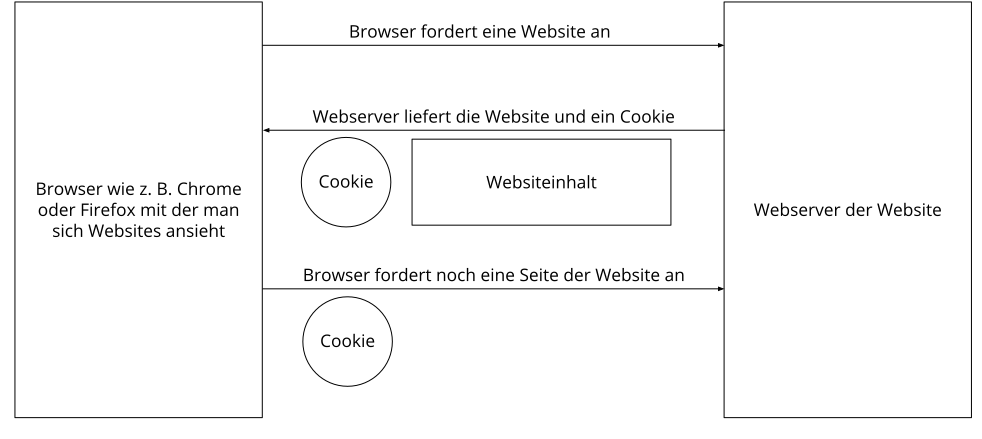
Die folgende Grafik zeigt eine m?gliche Interaktion zwischen einem Webbrowser wie z. B. Chrome und dem Webserver. Dabei fordert der Webbrowser eine Website an und erh?lt vom Server ein Cookie zur?ck, welches der Browser erneut verwendet, sobald eine andere Seite angefordert wird.
Es gibt sowohl Erstanbieter Cookies als auch Drittanbieter-Cookies. Erstanbieter-Cookies werden direkt von unserer Seite erstellt, Drittanbieter-Cookies werden von Partner-Websites (z.B. Google Analytics) erstellt. Jedes Cookie ist individuell zu bewerten, da jedes Cookie andere Daten speichert. Auch die Ablaufzeit eines Cookies variiert von ein paar Minuten bis hin zu ein paar Jahren. Cookies sind keine Software-Programme und enthalten keine Viren, Trojaner oder andere ?Sch?dlinge?. Cookies k?nnen auch nicht auf Informationen Ihres PCs zugreifen.
So k?nnen zum Beispiel Cookie-Daten aussehen:
Name: _ga
Wert:?GA1.2.1326744211.152122317514-9
Verwendungszweck: Unterscheidung der Websitebesucher
Ablaufdatum:?nach 2 Jahren
Diese Mindestgr??en sollte ein Browser unterst?tzen k?nnen:
- Mindestens 4096 Bytes pro Cookie
- Mindestens 50 Cookies pro Domain
- Mindestens 3000 Cookies insgesamt
Welche Arten von Cookies gibt es?
Die Frage welche Cookies wir im Speziellen verwenden, h?ngt von den verwendeten Diensten ab und wird in den folgenden Abschnitten der Datenschutzerkl?rung gekl?rt. An dieser Stelle m?chten wir kurz auf die verschiedenen Arten von HTTP-Cookies eingehen.
Man kann 4 Arten von Cookies unterscheiden:
Unerl?ssliche Cookies
Diese Cookies sind n?tig, um grundlegende Funktionen der Website sicherzustellen. Zum Beispiel braucht es diese Cookies, wenn ein User ein Produkt in den Warenkorb legt, dann auf anderen Seiten weitersurft und sp?ter erst zur Kasse geht. Durch diese Cookies wird der Warenkorb nicht gel?scht, selbst wenn der User sein Browserfenster schlie?t.
Zweckm??ige Cookies
Diese Cookies sammeln Infos ?ber das Userverhalten und ob der User etwaige Fehlermeldungen bekommt. Zudem werden mithilfe dieser Cookies auch die Ladezeit und das Verhalten der Website bei verschiedenen Browsern gemessen.
Zielorientierte Cookies
Diese Cookies sorgen f?r eine bessere Nutzerfreundlichkeit. Beispielsweise werden eingegebene Standorte, Schriftgr??en oder Formulardaten gespeichert.
Werbe-Cookies
Diese Cookies werden auch Targeting-Cookies genannt. Sie dienen dazu dem User individuell angepasste Werbung zu liefern. Das kann sehr praktisch, aber auch sehr nervig sein.
?blicherweise werden Sie beim erstmaligen Besuch einer Website gefragt, welche dieser Cookiearten Sie zulassen m?chten. Und nat?rlich wird diese Entscheidung auch in einem Cookie gespeichert.
Wenn Sie mehr ?ber Cookies wissen m?chten und technische Dokumentationen nicht scheuen, empfehlen wir https://datatracker.ietf.org/doc/html/rfc6265,?dem Request for Comments der Internet Engineering Task Force (IETF) namens ?HTTP State Management Mechanism?.
Zweck der Verarbeitung ?ber Cookies
Der Zweck ist letztendlich abh?ngig vom jeweiligen Cookie. Mehr Details dazu finden Sie weiter unten bzw. beim Hersteller der Software, die das Cookie setzt.
Welche Daten werden verarbeitet?
Cookies sind kleine Gehilfen f?r eine viele verschiedene Aufgaben. Welche Daten in Cookies gespeichert werden, kann man leider nicht verallgemeinern, aber wir werden Sie im Rahmen der folgenden Datenschutzerkl?rung ?ber die verarbeiteten bzw. gespeicherten Daten informieren.
Speicherdauer von Cookies
Die Speicherdauer h?ngt vom jeweiligen Cookie ab und wird weiter unter pr?zisiert. Manche Cookies werden nach weniger als einer Stunde gel?scht, andere k?nnen mehrere Jahre auf einem Computer gespeichert bleiben.
Sie haben au?erdem selbst Einfluss auf die Speicherdauer. Sie k?nnen ?ber ihren Browser s?mtliche Cookies jederzeit manuell l?schen (siehe auch unten ?Widerspruchsrecht?). Ferner werden Cookies, die auf einer Einwilligung beruhen, sp?testens nach Widerruf Ihrer Einwilligung gel?scht, wobei die Rechtm??igkeit der Speicherung bis dahin unber?hrt bleibt.
Widerspruchsrecht ? wie kann ich Cookies l?schen?
Wie und ob Sie Cookies verwenden wollen, entscheiden Sie selbst. Unabh?ngig von welchem Service oder welcher Website die Cookies stammen, haben Sie immer die M?glichkeit Cookies zu l?schen, zu deaktivieren oder nur teilweise zuzulassen. Zum Beispiel k?nnen Sie Cookies von Drittanbietern blockieren, aber alle anderen Cookies zulassen.
Wenn Sie feststellen m?chten, welche Cookies in Ihrem Browser gespeichert wurden, wenn Sie Cookie-Einstellungen ?ndern oder l?schen wollen, k?nnen Sie dies in Ihren Browser-Einstellungen finden:
Chrome: Cookies in Chrome l?schen, aktivieren und verwalten
Safari: Verwalten von Cookies und Websitedaten mit Safari
Firefox: Cookies l?schen, um Daten zu entfernen, die Websites auf Ihrem Computer abgelegt haben
Internet Explorer: L?schen und Verwalten von Cookies
Microsoft Edge: L?schen und Verwalten von Cookies
Falls Sie grunds?tzlich keine Cookies haben wollen, k?nnen Sie Ihren Browser so einrichten, dass er Sie immer informiert, wenn ein Cookie gesetzt werden soll. So k?nnen Sie bei jedem einzelnen Cookie entscheiden, ob Sie das Cookie erlauben oder nicht. Die Vorgangsweise ist je nach Browser verschieden. Am besten Sie suchen die Anleitung in Google mit dem Suchbegriff ?Cookies l?schen Chrome? oder ?Cookies deaktivieren Chrome? im Falle eines Chrome Browsers.
Rechtsgrundlage
Seit 2009 gibt es die sogenannten ?Cookie-Richtlinien?. Darin ist festgehalten, dass das Speichern von Cookies eine Einwilligung (Artikel 6 Abs. 1 lit. a DSGVO) von Ihnen verlangt. Innerhalb der EU-L?nder gibt es allerdings noch sehr unterschiedliche Reaktionen auf diese Richtlinien. In ?sterreich erfolgte aber die Umsetzung dieser Richtlinie in ? 96 Abs. 3 des Telekommunikationsgesetzes (TKG). In Deutschland wurden die Cookie-Richtlinien nicht als nationales Recht umgesetzt. Stattdessen erfolgte die Umsetzung dieser Richtlinie weitgehend in ? 15 Abs.3 des Telemediengesetzes (TMG).
F?r unbedingt notwendige Cookies, auch soweit keine Einwilligung vorliegt, bestehen berechtigte Interessen (Artikel 6 Abs. 1 lit. f DSGVO), die in den meisten F?llen wirtschaftlicher Natur sind. Wir m?chten den Besuchern der Website eine angenehme Benutzererfahrung bescheren und daf?r sind bestimmte Cookies oft unbedingt notwendig.
Soweit nicht unbedingt erforderliche Cookies zum Einsatz kommen, geschieht dies nur im Falle Ihrer Einwilligung. Rechtsgrundlage ist insoweit Art. 6 Abs. 1 lit. a DSGVO.
In den folgenden Abschnitten werden Sie genauer ?ber den Einsatz von Cookies informiert, sofern eingesetzte Software Cookies verwendet.
Webhosting Einleitung
|
Webhosting Zusammenfassung ? Betroffene: Besucher der Website |
Was ist Webhosting?
Wenn Sie heutzutage Websites besuchen, werden gewisse Informationen ? auch personenbezogene Daten ? automatisch erstellt und gespeichert, so auch auf dieser Website. Diese Daten sollten m?glichst sparsam und nur mit Begr?ndung verarbeitet werden. Mit Website meinen wir ?brigens die Gesamtheit aller Webseiten auf einer Domain, d.h. alles von der Startseite (Homepage) bis hin zur aller letzten Unterseite (wie dieser hier). Mit Domain meinen wir zum Beispiel beispiel.de oder musterbeispiel.com.
Wenn Sie eine Website auf einem Computer, Tablet oder Smartphone ansehen m?chten, verwenden Sie daf?r ein Programm, das sich Webbrowser nennt. Sie kennen vermutlich einige Webbrowser beim Namen: Google Chrome, Microsoft Edge, Mozilla Firefox und Apple Safari. Wir sagen kurz Browser oder Webbrowser dazu.
Um die Website anzuzeigen, muss sich der Browser zu einem anderen Computer verbinden, wo der Code der Website gespeichert ist: dem Webserver. Der Betrieb eines Webservers ist eine komplizierte und aufwendige Aufgabe, weswegen dies in der Regel von professionellen Anbietern, den Providern, ?bernommen wird. Diese bieten Webhosting an und sorgen damit f?r eine verl?ssliche und fehlerfreie Speicherung der Daten von Websites. Eine ganze Menge Fachbegriffe, aber bitte bleiben Sie dran, es wird noch besser!
Bei der Verbindungsaufnahme des Browsers auf Ihrem Computer (Desktop, Laptop, Tablet oder Smartphone) und w?hrend der Daten?bertragung zu und vom Webserver kann es zu einer Verarbeitung personenbezogener Daten kommen. Einerseits speichert Ihr Computer Daten, andererseits muss auch der Webserver Daten eine Zeit lang speichern, um einen ordentlichen Betrieb zu gew?hrleisten.
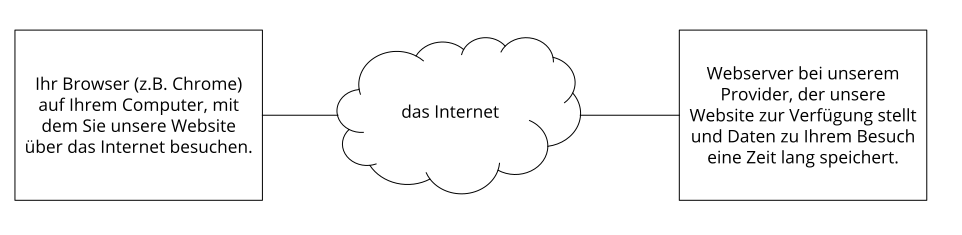
Ein Bild sagt mehr als tausend Worte, daher zeigt folgende Grafik zur Veranschaulichung das Zusammenspiel zwischen Browser, dem Internet und dem Hosting-Provider.
Warum verarbeiten wir personenbezogene Daten?
Die Zwecke der Datenverarbeitung sind:
- Professionelles Hosting der Website und Absicherung des Betriebs
- zur Aufrechterhaltung der Betriebs- und IT-Sicherheit
- Anonyme Auswertung des Zugriffsverhaltens zur Verbesserung unseres Angebots und ggf. zur Strafverfolgung bzw. Verfolgung von Anspr?chen
Welche Daten werden verarbeitet?
Auch w?hrend Sie unsere Website jetzt gerade besuchen, speichert unser Webserver, das ist der Computer auf dem diese Webseite gespeichert ist, in der Regel automatisch Daten wie
- die komplette Internetadresse (URL) der aufgerufenen Webseite
- Browser und Browserversion (z. B. Chrome 87)
- das verwendete Betriebssystem (z. B. Windows 10)
- die Adresse (URL) der zuvor besuchten Seite (Referrer URL) (z. B. https://www.beispielquellsite.de/vondabinichgekommen/)
- den Hostnamen und die IP-Adresse des Ger?ts von welchem aus zugegriffen wird (z. B. COMPUTERNAME und 194.23.43.121)
- Datum und Uhrzeit
- in Dateien, den sogenannten Webserver-Logfiles
Wie lange werden Daten gespeichert?
In der Regel werden die oben genannten Daten zwei Wochen gespeichert und danach automatisch gel?scht. Wir geben diese Daten nicht weiter, k?nnen jedoch nicht ausschlie?en, dass diese Daten beim Vorliegen von rechtswidrigem Verhalten von Beh?rden eingesehen werden.
Kurz gesagt: Ihr Besuch wird durch unseren Provider (Firma, die unsere Website auf speziellen Computern (Servern) laufen l?sst), protokolliert, aber wir geben Ihre Daten nicht ohne Zustimmung weiter!
Rechtsgrundlage
Die Rechtm??igkeit der Verarbeitung personenbezogener Daten im Rahmen des Webhosting ergibt sich aus Art. 6 Abs. 1 lit. f DSGVO (Wahrung der berechtigten Interessen), denn die Nutzung von professionellem Hosting bei einem Provider ist notwendig, um das Unternehmen im Internet sicher und nutzerfreundlich pr?sentieren und Angriffe und Forderungen hieraus gegebenenfalls verfolgen zu k?nnen.
Zwischen uns und dem Hosting-Provider besteht in der Regel ein Vertrag ?ber die Auftragsverarbeitung gem?? Art. 28 f. DSGVO, der die Einhaltung von Datenschutz gew?hrleistet und Datensicherheit garantiert.
Webhosting-Provider Extern Datenschutzerkl?rung
?Nachfolgend finden Sie die Kontaktdaten unseres externen Hosting-Providers, wo Sie, zus?tzlich zu den Informationen oben, mehr zur Datenverarbeitung erfahren k?nnen:
easyname GmbH
Canettistra?e 5/10, A-1100 Wien
Mehr ?ber die Datenverarbeitung bei diesem Provider erfahren Sie in der Datenschutzerkl?rung.
Web Analytics Einleitung
|
Web Analytics Datenschutzerkl?rung Zusammenfassung ? Betroffene: Besucher der Website |
Was ist Web Analytics?
Wir verwenden auf unserer Website Software zur Auswertung des Verhaltens der Website-Besucher, kurz Web Analytics oder Web-Analyse genannt. Dabei werden Daten gesammelt, die der jeweilige Analytic-Tool-Anbieter (auch Trackingtool genannt) speichert, verwaltet und verarbeitet. Mit Hilfe der Daten werden Analysen ?ber das Nutzerverhalten auf unserer Website erstellt und uns als Websitebetreiber zur Verf?gung gestellt. Zus?tzlich bieten die meisten Tools verschiedene Testm?glichkeiten an. So k?nnen wir etwa testen, welche Angebote oder Inhalte bei unseren Besuchern am besten ankommen. Daf?r zeigen wir Ihnen f?r einen begrenzten Zeitabschnitt zwei verschiedene Angebote. Nach dem Test (sogenannter A/B-Test) wissen wir, welches Produkt bzw. welcher Inhalt unsere Websitebesucher interessanter finden. F?r solche Testverfahren, wie auch f?r andere Analytics-Verfahren, k?nnen auch Userprofile erstellt werden und die Daten in Cookies gespeichert werden.
Warum betreiben wir Web Analytics?
Mit unserer Website haben wir ein klares Ziel vor Augen: wir wollen f?r unsere Branche das beste Webangebot auf dem Markt liefern. Um dieses Ziel zu erreichen, wollen wir einerseits das beste und interessanteste Angebot bieten und andererseits darauf achten, dass Sie sich auf unserer Website rundum wohlf?hlen. Mit Hilfe von Webanalyse-Tools k?nnen wir das Verhalten unserer Websitebesucher genauer unter die Lupe nehmen und dann entsprechend unser Webangebot f?r Sie und uns verbessern. So k?nnen wir beispielsweise erkennen wie alt unsere Besucher durchschnittlich sind, woher sie kommen, wann unsere Website am meisten besucht wird oder welche Inhalte oder Produkte besonders beliebt sind. All diese Informationen helfen uns die Website zu optimieren und somit bestens an Ihre Bed?rfnisse, Interessen und W?nsche anzupassen.
Welche Daten werden verarbeitet?
Welche Daten genau gespeichert werden, h?ngt nat?rlich von den verwendeten Analyse-Tools ab. Doch in der Regel wird zum Beispiel gespeichert, welche Inhalte Sie auf unserer Website ansehen, auf welche Buttons oder Links Sie klicken, wann Sie eine Seite aufrufen, welchen Browser sie verwenden, mit welchem Ger?t (PC, Tablet, Smartphone usw.) Sie die Website besuchen oder welches Computersystem Sie verwenden. Wenn Sie damit einverstanden waren, dass auch Standortdaten erhoben werden d?rfen, k?nnen auch diese durch den Webanalyse-Tool-Anbieter verarbeitet werden.
Zudem wird auch Ihre IP-Adresse gespeichert. Gem?? der Datenschutz-Grundverordnung (DSGVO) sind IP-Adressen personenbezogene Daten. Ihre IP-Adresse wird allerdings in der Regel pseudonymisiert (also in unkenntlicher und gek?rzter Form) gespeichert. F?r den Zweck der Tests, der Webanalyse und der Weboptimierung werden grunds?tzlich keine direkten Daten, wie etwa Ihr Name, Ihr Alter, Ihre Adresse oder Ihre E-Mail-Adresse gespeichert. All diese Daten werden, sofern sie erhoben werden, pseudonymisiert gespeichert. So k?nnen Sie als Person nicht identifiziert werden.
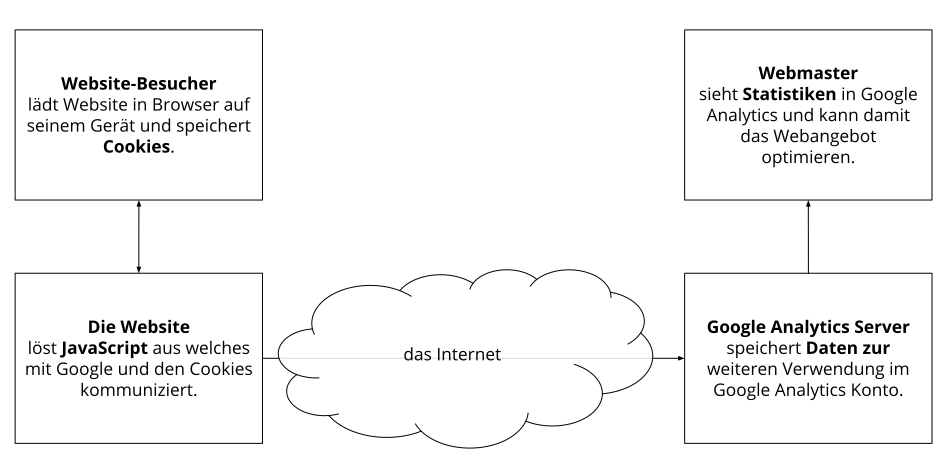
Das folgende Beispiel zeigt schematisch die Funktionsweise von Google Analytics als Beispiel f?r client-basiertes Webtracking mit Java-Script-Code.
Wie lange die jeweiligen Daten gespeichert werden, h?ngt immer vom Anbieter ab. Manche Cookies speichern Daten nur f?r ein paar Minuten bzw. bis Sie die Website wieder verlassen, andere Cookies k?nnen Daten ?ber mehrere Jahre speichern.
Dauer der Datenverarbeitung
?ber die Dauer der Datenverarbeitung informieren wir Sie weiter unten, sofern wir weitere Informationen dazu haben. Generell verarbeiten wir personenbezogene Daten nur so lange wie es f?r die Bereitstellung unserer Dienstleistungen und Produkte unbedingt notwendig ist. Wenn es, wie zum Beispiel im Fall von Buchhaltung, gesetzlich vorgeschrieben ist, kann diese Speicherdauer auch ?berschritten werden.
Widerspruchsrecht
Sie haben auch jederzeit das Recht und die M?glichkeit Ihre Einwilligung zur Verwendung von Cookies bzw. Drittanbietern zu widerrufen. Das funktioniert entweder ?ber unser Cookie-Management-Tool oder ?ber andere Opt-Out-Funktionen. Zum Beispiel k?nnen Sie auch die Datenerfassung durch Cookies verhindern, indem Sie in Ihrem Browser die Cookies verwalten, deaktivieren oder l?schen.
Rechtsgrundlage
Der Einsatz von Web-Analytics setzt Ihre Einwilligung voraus, welche wir mit unserem Cookie Popup eingeholt haben. Diese Einwilligung stellt laut Art. 6 Abs. 1 lit. a DSGVO (Einwilligung) die Rechtsgrundlage f?r die Verarbeitung personenbezogener Daten, wie sie bei der Erfassung durch Web-Analytics Tools vorkommen kann, dar.
Zus?tzlich zur Einwilligung besteht von unserer Seite ein berechtigtes Interesse daran, das Verhalten der Websitebesucher zu analysieren und so unser Angebot technisch und wirtschaftlich zu verbessern. Mit Hilfe von Web-Analytics erkennen wir Fehler der Website, k?nnen Attacken identifizieren und die Wirtschaftlichkeit verbessern. Die Rechtsgrundlage daf?r ist Art. 6 Abs. 1 lit. f DSGVO (Berechtigte Interessen). Wir setzen die Tools gleichwohl nur ein, soweit sie eine Einwilligung erteilt haben.
Da bei Web-Analytics-Tools Cookies zum Einsatz kommen, empfehlen wir Ihnen auch das Lesen unserer allgemeinen Datenschutzerkl?rung zu Cookies. Um zu erfahren, welche Daten von Ihnen genau gespeichert und verarbeitet werden, sollten Sie die Datenschutzerkl?rungen der jeweiligen Tools durchlesen.
Informationen zu speziellen Web-Analytics-Tools, erhalten Sie ? sofern vorhanden ? in den folgenden Abschnitten.
Google Analytics Datenschutzerkl?rung
|
Google Analytics Datenschutzerkl?rung Zusammenfassung ? Betroffene: Besucher der Website |
Was ist Google Analytics?
Wir verwenden auf unserer Website das Analyse-Tracking Tool Google Analytics (GA) des amerikanischen Unternehmens Google Inc. F?r den europ?ischen Raum ist das Unternehmen Google Ireland Limited (Gordon House, Barrow Street Dublin 4, Irland) f?r alle Google-Dienste verantwortlich. Google Analytics sammelt Daten ?ber Ihre Handlungen auf unserer Website. Wenn Sie beispielsweise einen Link anklicken, wird diese Aktion in einem Cookie gespeichert und an Google Analytics versandt. Mithilfe der Berichte, die wir von Google Analytics erhalten, k?nnen wir unsere Website und unser Service besser an Ihre W?nsche anpassen. Im Folgenden gehen wir n?her auf das Tracking-Tool ein und informieren Sie vor allem dar?ber, welche Daten gespeichert werden und wie Sie das verhindern k?nnen.
Google Analytics ist ein Trackingtool, das der Datenverkehrsanalyse unserer Website dient. Damit Google Analytics funktioniert, wird ein Tracking-Code in den Code unserer Website eingebaut. Wenn Sie unsere Website besuchen, zeichnet dieser Code verschiedene Handlungen auf, die Sie auf unserer Website ausf?hren. Sobald Sie unsere Website verlassen, werden diese Daten an die Google-Analytics-Server gesendet und dort gespeichert.
Google verarbeitet die Daten und wir bekommen Berichte ?ber Ihr Userverhalten. Dabei kann es sich unter anderem um folgende Berichte handeln:
- Zielgruppenberichte: ?ber Zielgruppenberichte lernen wir unsere User besser kennen und wissen genauer, wer sich f?r unser Service interessiert.
- Anzeigeberichte: Durch Anzeigeberichte k?nnen wir unsere Onlinewerbung leichter analysieren und verbessern.
- Akquisitionsberichte: Akquisitionsberichte geben uns hilfreiche Informationen dar?ber, wie wir mehr Menschen f?r unser Service begeistern k?nnen.
- Verhaltensberichte: Hier erfahren wir, wie Sie mit unserer Website interagieren. Wir k?nnen nachvollziehen welchen Weg Sie auf unserer Seite zur?cklegen und welche Links Sie anklicken.
- Conversionsberichte: Conversion nennt man einen Vorgang, bei dem Sie aufgrund einer Marketing-Botschaft eine gew?nschte Handlung ausf?hren. Zum Beispiel, wenn Sie von einem reinen Websitebesucher zu einem K?ufer oder Newsletter-Abonnent werden. Mithilfe dieser Berichte erfahren wir mehr dar?ber, wie unsere Marketing-Ma?nahmen bei Ihnen ankommen. So wollen wir unsere Conversionrate steigern.
- Echtzeitberichte: Hier erfahren wir immer sofort, was gerade auf unserer Website passiert. Zum Beispiel sehen wir wie viele User gerade diesen Text lesen.
Warum verwenden wir Google Analytics auf unserer Website?
Unser Ziel mit dieser Website ist klar: Wir wollen Ihnen das bestm?gliche Service bieten. Die Statistiken und Daten von Google Analytics helfen uns dieses Ziel zu erreichen.
Die statistisch ausgewerteten Daten zeigen uns ein klares Bild von den St?rken und Schw?chen unserer Website. Einerseits k?nnen wir unsere Seite so optimieren, dass sie von interessierten Menschen auf Google leichter gefunden wird. Andererseits helfen uns die Daten, Sie als Besucher besser zu verstehen. Wir wissen somit sehr genau, was wir an unserer Website verbessern m?ssen, um Ihnen das bestm?gliche Service zu bieten. Die Daten dienen uns auch, unsere Werbe- und Marketing-Ma?nahmen individueller und kosteng?nstiger durchzuf?hren. Schlie?lich macht es nur Sinn, unsere Produkte und Dienstleistungen Menschen zu zeigen, die sich daf?r interessieren.
Welche Daten werden von Google Analytics gespeichert?
Google Analytics erstellt mithilfe eines Tracking-Codes eine zuf?llige, eindeutige ID, die mit Ihrem Browser-Cookie verbunden ist. So erkennt Sie Google Analytics als neuen User. Wenn Sie das n?chste Mal unsere Seite besuchen, werden Sie als ?wiederkehrender? User erkannt. Alle gesammelten Daten werden gemeinsam mit dieser User-ID gespeichert. So ist es ?berhaupt erst m?glich pseudonyme Userprofile auszuwerten.
Um mit Google Analytics unsere Website analysieren zu k?nnen, muss eine Property-ID in den Tracking-Code eingef?gt werden. Die Daten werden dann in der entsprechenden Property gespeichert. F?r jede neu angelegte Property ist die Google Analytics 4-Property standardm??ig. Alternativ kann man aber auch noch die Universal Analytics Property erstellen. Je nach verwendeter Property werden Daten unterschiedlich lange gespeichert.
Durch Kennzeichnungen wie Cookies und App-Instanz-IDs werden Ihre Interaktionen auf unserer Website gemessen. Interaktionen sind alle Arten von Handlungen, die Sie auf unserer Website ausf?hren. Wenn Sie auch andere Google-Systeme (wie z.B. ein Google-Konto) n?tzen, k?nnen ?ber Google Analytics generierte Daten mit Drittanbieter-Cookies verkn?pft werden. Google gibt keine Google Analytics-Daten weiter, au?er wir als Websitebetreiber genehmigen das. Zu Ausnahmen kann es kommen, wenn es gesetzlich erforderlich ist.
Folgende Cookies werden von Google Analytics verwendet:
Name: _ga
Wert: 2.1326744211.152122317514-5
Verwendungszweck: Standardm??ig verwendet analytics.js das Cookie _ga, um die User-ID zu speichern. Grunds?tzlich dient es zur Unterscheidung der Webseitenbesucher.
Ablaufdatum: nach 2 Jahren
Name: _gid
Wert: 2.1687193234.152122317514-1
Verwendungszweck:?Das Cookie dient auch zur Unterscheidung der Webseitenbesucher
Ablaufdatum:?nach 24 Stunden
Name: _gat_gtag_UA_<property-id>
Wert: 1
Verwendungszweck: Wird zum Senken der Anforderungsrate verwendet. Wenn Google Analytics ?ber den Google Tag Manager bereitgestellt wird, erh?lt dieser Cookie den Namen _dc_gtm_ <property-id>.
Ablaufdatum: nach 1 Minute
Name: AMP_TOKEN
Wert: keine Angaben
Verwendungszweck: Das Cookie hat einen Token, mit dem eine User ID vom AMP-Client-ID-Dienst abgerufen werden kann. Andere m?gliche Werte weisen auf eine Abmeldung, eine Anfrage oder einen Fehler hin.
Ablaufdatum:?nach 30 Sekunden bis zu einem Jahr
Name: __utma
Wert: 1564498958.1564498958.1564498958.1
Verwendungszweck: Mit diesem Cookie kann man Ihr Verhalten auf der Website verfolgen und die Leistung messen. Das Cookie wird jedes Mal aktualisiert, wenn Informationen an Google Analytics gesendet werden.
Ablaufdatum: nach 2 Jahren
Name: __utmt
Wert: 1
Verwendungszweck: Das Cookie wird wie _gat_gtag_UA_<property-id> zum Drosseln der Anforderungsrate verwendet.
Ablaufdatum:?nach 10 Minuten
Name: __utmb
Wert: 3.10.1564498958
Verwendungszweck: Dieses Cookie wird verwendet, um neue Sitzungen zu bestimmen. Es wird jedes Mal aktualisiert, wenn neue Daten bzw. Infos an Google Analytics gesendet werden.
Ablaufdatum:?nach 30 Minuten
Name: __utmc
Wert: 167421564
Verwendungszweck: Dieses Cookie wird verwendet, um neue Sitzungen f?r wiederkehrende Besucher festzulegen. Dabei handelt es sich um ein Session-Cookie und wird nur solange gespeichert, bis Sie den Browser wieder schlie?en.
Ablaufdatum: Nach Schlie?ung des Browsers
Name: __utmz
Wert: m|utmccn=(referral)|utmcmd=referral|utmcct=/
Verwendungszweck: Das Cookie wird verwendet, um die Quelle des Besucheraufkommens auf unserer Website zu identifizieren. Das hei?t, das Cookie speichert, von wo Sie auf unsere Website gekommen sind. Das kann eine andere Seite bzw. eine Werbeschaltung gewesen sein.
Ablaufdatum: nach 6 Monaten
Name: __utmv
Wert: keine Angabe
Verwendungszweck: Das Cookie wird verwendet, um benutzerdefinierte Userdaten zu speichern. Es wird immer aktualisiert, wenn Informationen an Google Analytics gesendet werden.
Ablaufdatum: nach 2 Jahren
Anmerkung:?Diese Aufz?hlung kann keinen Anspruch auf Vollst?ndigkeit erheben, da Google die Wahl ihrer Cookies immer wieder auch ver?ndert.
Hier zeigen wir Ihnen einen ?berblick ?ber die wichtigsten Daten, die mit Google Analytics erhoben werden:
Heatmaps: Google legt sogenannte Heatmaps an. ?ber Heatmaps sieht man genau jene Bereiche, die Sie anklicken. So bekommen wir Informationen, wo Sie auf unserer Seite ?unterwegs? sind.
Sitzungsdauer: Als Sitzungsdauer bezeichnet Google die Zeit, die Sie auf unserer Seite verbringen, ohne die Seite zu verlassen. Wenn Sie 20 Minuten inaktiv waren, endet die Sitzung automatisch.
Absprungrate (engl. Bouncerate): Von einem Absprung ist die Rede, wenn Sie auf unserer Website nur eine Seite ansehen und dann unsere Website wieder verlassen.
Kontoerstellung: Wenn Sie auf unserer Website ein Konto erstellen bzw. eine Bestellung machen, erhebt Google Analytics diese Daten.
IP-Adresse: Die IP-Adresse wird nur in gek?rzter Form dargestellt, damit keine eindeutige Zuordnung m?glich ist.
Standort: ?ber die IP-Adresse kann das Land und Ihr ungef?hrer Standort bestimmt werden. Diesen Vorgang bezeichnet man auch als IP- Standortbestimmung.
Technische Informationen: Zu den technischen Informationen z?hlen unter anderem Ihr Browsertyp, Ihr Internetanbieter oder Ihre Bildschirmaufl?sung.
Herkunftsquelle: Google Analytics beziehungsweise uns interessiert nat?rlich auch ?ber welche Website oder welche Werbung Sie auf unsere Seite gekommen sind.
Weitere Daten sind Kontaktdaten, etwaige Bewertungen, das Abspielen von Medien (z. B. wenn Sie ein Video ?ber unsere Seite abspielen), das Teilen von Inhalten ?ber Social Media oder das Hinzuf?gen zu Ihren Favoriten. Die Aufz?hlung hat keinen Vollst?ndigkeitsanspruch und dient nur zu einer allgemeinen Orientierung der Datenspeicherung durch Google Analytics.
Wie lange und wo werden die Daten gespeichert?
Google hat ihre Server auf der ganzen Welt verteilt. Die meisten Server befinden sich in Amerika und folglich werden Ihre Daten meist auf amerikanischen Servern gespeichert. Hier k?nnen Sie genau nachlesen wo sich die Google-Rechenzentren befinden: https://www.google.com/about/datacenters/locations/?hl=de
Ihre Daten werden auf verschiedenen physischen Datentr?gern verteilt. Das hat den Vorteil, dass die Daten schneller abrufbar sind und vor Manipulation besser gesch?tzt sind. In jedem Google-Rechenzentrum gibt es entsprechende Notfallprogramme f?r Ihre Daten. Wenn beispielsweise die Hardware bei Google ausf?llt oder Naturkatastrophen Server lahmlegen, bleibt das Risiko einer Dienstunterbrechung bei Google dennoch gering.
Die Aufbewahrungsdauer der Daten h?ngt von den verwendeten Properties ab. Bei der Verwendung der neueren Google Analytics 4-Properties ist die Aufbewahrungsdauer Ihrer Userdaten auf 14 Monate fix eingestellt. F?r andere sogenannte Ereignisdaten haben wir die M?glichkeit eine Aufbewahrungsdauer von 2 Monaten oder 14 Monaten zu w?hlen.
Bei Universal Analytics-Properties ist bei Google Analytics eine Aufbewahrungsdauer Ihrer Userdaten von 26 Monaten standardisiert eingestellt. Dann werden Ihre Userdaten gel?scht. Allerdings haben wir die M?glichkeit, die Aufbewahrungsdauer von Nutzdaten selbst zu w?hlen. Daf?r stehen uns f?nf Varianten zur Verf?gung:
- L?schung nach 14 Monaten
- L?schung nach 26 Monaten
- L?schung nach 38 Monaten
- L?schung nach 50 Monaten
- Keine automatische L?schung
Zus?tzlich gibt es auch die Option, dass Daten erst dann gel?scht werden, wenn Sie innerhalb des von uns gew?hlten Zeitraums nicht mehr unsere Website besuchen. In diesem Fall wird die Aufbewahrungsdauer jedes Mal zur?ckgesetzt, wenn Sie unsere Website innerhalb des festgelegten Zeitraums wieder besuchen.
Wenn der festgelegte Zeitraum abgelaufen ist, werden einmal im Monat die Daten gel?scht. Diese Aufbewahrungsdauer gilt f?r Ihre Daten, die mit Cookies, Usererkennung und Werbe-IDs (z.B. Cookies der DoubleClick-Domain) verkn?pft sind. Berichtergebnisse basieren auf aggregierten Daten und werden unabh?ngig von Nutzerdaten gespeichert. Aggregierte Daten sind eine Zusammenschmelzung von Einzeldaten zu einer gr??eren Einheit.
Wie kann ich meine Daten l?schen bzw. die Datenspeicherung verhindern?
Nach dem Datenschutzrecht der Europ?ischen Union haben Sie das Recht, Auskunft ?ber Ihre Daten zu erhalten, sie zu aktualisieren, zu l?schen oder einzuschr?nken. Mithilfe des Browser-Add-ons zur Deaktivierung von Google Analytics-JavaScript (ga.js, analytics.js, dc.js) verhindern Sie, dass Google Analytics Ihre Daten verwendet. Das Browser-Add-on k?nnen Sie unter https://tools.google.com/dlpage/gaoptout?hl=de runterladen und installieren. Beachten Sie bitte, dass durch dieses Add-on nur die Datenerhebung durch Google Analytics deaktiviert wird.
Falls Sie grunds?tzlich Cookies deaktivieren, l?schen oder verwalten wollen, finden Sie unter dem Abschnitt ?Cookies? die entsprechenden Links zu den jeweiligen Anleitungen der bekanntesten Browser.
Rechtsgrundlage
Der Einsatz von Google Analytics setzt Ihre Einwilligung voraus, welche wir mit unserem Cookie Popup eingeholt haben. Diese Einwilligung stellt laut Art. 6 Abs. 1 lit. a DSGVO (Einwilligung) die Rechtsgrundlage f?r die Verarbeitung personenbezogener Daten, wie sie bei der Erfassung durch Web-Analytics Tools vorkommen kann, dar.
Zus?tzlich zur Einwilligung besteht von unserer Seite ein berechtigtes Interesse daran, dass Verhalten der Websitebesucher zu analysieren und so unser Angebot technisch und wirtschaftlich zu verbessern. Mit Hilfe von Google Analytics erkennen wir Fehler der Website, k?nnen Attacken identifizieren und die Wirtschaftlichkeit verbessern. Die Rechtsgrundlage daf?r ist Art. 6 Abs. 1 lit. f DSGVO (Berechtigte Interessen). Wir setzen Google Analytics gleichwohl nur ein, soweit Sie eine Einwilligung erteilt haben.
Google verarbeitet Daten von Ihnen u.a. auch in den USA. Wir weisen darauf hin, dass nach Meinung des Europ?ischen Gerichtshofs derzeit kein angemessenes Schutzniveau f?r den Datentransfer in die USA besteht. Dies kann mit verschiedenen Risiken f?r die Rechtm??igkeit und Sicherheit der Datenverarbeitung einhergehen.
Als Grundlage der Datenverarbeitung bei Empf?ngern mit Sitz in Drittstaaten (au?erhalb der Europ?ischen Union, Island, Liechtenstein, Norwegen, also insbesondere in den USA) oder einer Datenweitergabe dorthin verwendet Google sogenannte Standardvertragsklauseln (= Art. 46. Abs. 2 und 3 DSGVO). Standardvertragsklauseln (Standard Contractual Clauses ? SCC) sind von der EU-Kommission bereitgestellte Mustervorlagen und sollen sicherstellen, dass Ihre Daten auch dann den europ?ischen Datenschutzstandards entsprechen, wenn diese in Drittl?nder (wie beispielsweise in die USA) ?berliefert und dort gespeichert werden. Durch diese Klauseln verpflichtet sich Google, bei der Verarbeitung Ihrer relevanten Daten, das europ?ische Datenschutzniveau einzuhalten, selbst wenn die Daten in den USA gespeichert, verarbeitet und verwaltet werden. Diese Klauseln basieren auf einem Durchf?hrungsbeschluss der EU-Kommission. Sie finden den Beschluss und die entsprechenden Standardvertragsklauseln u.a. hier: https://eur-lex.europa.eu/eli/dec_impl/2021/914/oj?locale=de
Die Google Ads Datenverarbeitungsbedingungen (Google Ads Data Processing Terms), welche auf die Standardvertragsklauseln verweisen, finden Sie unter https://business.safety.google/intl/de/adsprocessorterms/.
Wir hoffen, wir konnten Ihnen die wichtigsten Informationen rund um die Datenverarbeitung von Google Analytics n?herbringen. Wenn Sie mehr ?ber den Tracking-Dienst erfahren wollen, empfehlen wir diese beiden Links: https://marketingplatform.google.com/about/analytics/terms/de/ und https://support.google.com/analytics/answer/6004245?hl=de.
Auftragsverarbeitungsvertrag (AVV) Google Analytics
Wir haben im Sinne des Artikels 28 der Datenschutz-Grundverordnung (DSGVO) mit Google einen Auftragsverarbeitungsvertrag (AVV) abgeschlossen. Was ein AVV genau ist und vor allem was in einem AVV enthalten sein muss, k?nnen Sie in unserem allgemeinen Abschnitt ?Auftragsverarbeitungsvertrag (AVV)? nachlesen.
Dieser Vertrag ist gesetzlich vorgeschrieben, weil Google in unserem Auftrag personenbezogene Daten verarbeitet. Darin wird gekl?rt, dass Google Daten, die sie von uns erhalten, nur nach unserer Weisung verarbeiten darf und die DSGVO einhalten muss. Den Link zu den Auftragsdatenverarbeitungsbedingungen finden Sie unter https://business.safety.google/intl/de/adsprocessorterms/
Google Analytics Berichte zu demografischen Merkmalen und Interessen
Wir haben in Google Analytics die Funktionen f?r Werbeberichte eingeschaltet. Die Berichte zu demografischen Merkmalen und Interessen enthalten Angaben zu Alter, Geschlecht und Interessen. Damit k?nnen wir uns ? ohne diese Daten einzelnen Personen zuordnen zu k?nnen ? ein besseres Bild von unseren Nutzern machen. Mehr ?ber die Werbefunktionen erfahren Sie auf?https://support.google.com/analytics/answer/3450482?hl=de_AT&utm_id=ad.
Sie k?nnen die Nutzung der Aktivit?ten und Informationen Ihres Google Kontos unter ?Einstellungen f?r Werbung? auf https://adssettings.google.com/authenticated per Checkbox beenden.
Google Analytics im Einwilligungsmodus
Abh?ngig von Ihrer Einwilligung werden im sogenannten Einwilligungsmodus (bzw. ?Consent Mode?) personenbezogene Daten von Ihnen durch Google Analytics verarbeitet. Sie k?nnen w?hlen, ob Sie Google-Analytics-Cookies zustimmen oder nicht. Damit w?hlen Sie auch, welche Daten Google Analytics von Ihnen verarbeitet darf. Diese erhobenen Daten werden haupts?chlich daf?r verwendet, Messungen ?ber das Userverhalten auf der Website durchzuf?hren, zielgerichtete Werbung auszuspielen und uns Web-Analyseberichte zu liefern. In der Regel willigen Sie der Datenverarbeitung durch Google ?ber ein Cookie-Consent-Tool ein. Wenn Sie der Datenverarbeitung nicht einwilligen, werden nur aggregierte Daten erfasst und verarbeitet. Das bedeutet, Daten k?nnen einzelnen Usern nicht zugeordnet werden und es entsteht somit kein Userprofil von Ihnen. Sie k?nnen auch nur der statistischen Messung zustimmen. Dabei werden keine personenbezogenen Daten verarbeitet und folglich nicht f?r Werbungen oder Werbemesserfolge verwendet.
Google Analytics IP-Anonymisierung
Wir haben auf dieser Webseite die IP-Adressen-Anonymisierung von Google Analytics implementiert.?Diese Funktion wurde von Google entwickelt, damit diese Webseite die geltenden Datenschutzbestimmungen und Empfehlungen der lokalen Datenschutzbeh?rden einhalten kann, wenn diese eine Speicherung der vollst?ndigen IP-Adresse untersagen. Die Anonymisierung bzw. Maskierung der IP findet statt, sobald die IP-Adressen im Google Analytics-Datenerfassungsnetzwerk eintreffen und bevor eine Speicherung oder Verarbeitung der Daten stattfindet.
Mehr Informationen zur IP-Anonymisierung finden Sie auf?https://support.google.com/analytics/answer/2763052?hl=de.
Google Site Kit Datenschutzerkl?rung
|
Google Site Kit Datenschutzerkl?rung Zusammenfassung ? Betroffene: Besucher der Website |
Was ist Google Site Kit?
Wir haben in unsere Website das WordPress-Plugin Google Site Kit des amerikanischen Unternehmens Google Inc. eingebunden. F?r den europ?ischen Raum ist das Unternehmen Google Ireland Limited (Gordon House, Barrow Street Dublin 4, Irland) f?r alle Google-Dienste verantwortlich. Mit Google Site Kit k?nnen wir schnell und einfach Statistiken, die aus diversen Google-Produkten wie Google Analytics stammen, direkt in unserem WordPress-Dashboard ansehen. Das Tool beziehungsweise die in Google Site Kit eingebundenen Tools sammeln unter anderem auch personenbezogene Daten von Ihnen. In dieser Datenschutzerkl?rung erkl?ren wir Ihnen, warum wir Google Site Kit verwenden, wie lange und wo Daten gespeichert werden und welche weiteren Datenschutztexte in diesem Zusammenhang f?r Sie relevant sind.
Google Site Kit ist ein Plugin f?r das Content-Management-System WordPress. Mit diesem Plugin k?nnen wir wichtige Statistiken zur Websiteanalyse direkt in unserem Dashboard ansehen. Dabei handelt es sich um Statistiken, die von anderen Google-Produkten erhoben werden. Allen voran von Google Analytics. Neben Google Analytics k?nnen auch noch die Services Google Search Console, Page Speed Insight, Google AdSense, Google Optimize und Google Tag Manager mit Google Site Kit verkn?pft werden.
Warum verwenden wir Google Site Kit auf unserer Website?
Als Dienstleister ist es unsere Aufgabe, Ihnen auf unserer Website das bestm?gliche Erlebnis zu bieten. Sie sollen sich auf unserer Website wohl f?hlen und schnell und einfach genau das finden, was Sie suchen. Statistische Auswertungen helfen uns dabei, sie besser kennen zu lernen und unser Angebot an Ihre W?nsche und Interessen anzupassen. F?r diese Auswertungen nutzen wir verschiedene Google-Tools. Site Kit erleichtert diesbez?glich unsere Arbeit sehr, weil wir die Statistiken der Google-Produkte gleich im Dashboard ansehen und analysieren k?nnen. Wir m?ssen uns also nicht mehr f?r das jeweilige Tool extra anmelden. Site Kit bietet somit immer einen guten ?berblick ?ber die wichtigsten Analyse-Daten.
Welche Daten werden von Google Site Kit gespeichert?
Wenn Sie im Cookie-Hinweis (auch Script oder Banner genannt) Trackingtools aktiv zugestimmt haben, werden durch Google-Produkte wie Google Analytics Cookies gesetzt und Daten von Ihnen, etwa ?ber Ihr Userverhalten, an Google gesendet, dort gespeichert und verarbeitet. Darunter werden auch personenbezogen Daten wie Ihre IP-Adresse gespeichert.
F?r genauere Informationen zu den einzelnen Diensten haben wir eigenen Textabschnitte in dieser Datenschutzerkl?rung. Sehen Sie sich beispielsweise unsere Datenschutzerkl?rung zu Google Analytics an. Hier gehen wir sehr genau auf die erhobenen Daten ein. Sie erfahren wie lange Google Analytics Daten speichert, verwaltet und verarbeitet, welche Cookies zum Einsatz kommen k?nnen und wie Sie die Datenspeicherung verhindern. Ebenso haben wir auch f?r weitere Google-Dienste wie etwa den Google Tag Manager oder Google AdSense eigene Datenschutzerkl?rungen mit umfassenden Informationen.
Im Folgenden zeigen wir Ihnen beispielhafte Google-Analytics-Cookies, die in Ihrem Browser gesetzt werden k?nnen, sofern Sie der Datenverarbeitung durch Google grunds?tzlich zugestimmt haben. Bitte beachten Sie, dass es sich bei diesen Cookies lediglich um eine Auswahl handelt:
Name: _ga
Wert:2.1326744211.152122317514-2
Verwendungszweck: Standardm??ig verwendet analytics.js das Cookie _ga, um die User-ID zu speichern. Grunds?tzlich dient es zur Unterscheidung der Websitenbesucher.
Ablaufdatum: nach 2 Jahren
Name: _gid
Wert:2.1687193234.152122317514-7
Verwendungszweck: Auch dieses Cookie dient der Unterscheidung von Websitesbesuchern.
Ablaufdatum:?nach 24 Stunden
Name: _gat_gtag_UA_<property-id>
Wert: 1
Verwendungszweck: Dieses Cookie wird zum Senken der Anforderungsrate verwendet.
Ablaufdatum: nach 1 Minute
Wie lange und wo werden die Daten gespeichert?
Google speichert erhobene Daten auf eigenen Google-Servern, die weltweit verteilt sind. Die meisten Server befinden sich in den Vereinigten Staaten und daher ist es leicht m?glich, dass Ihre Daten auch dort gespeichert werden. Auf https://www.google.com/about/datacenters/locations/?hl=de sehen Sie genau, wo das Unternehmen Server bereitstellt.
Daten, die durch Google Analytics erhoben werden, werden standardisiert 26 Monate aufbewahrt. Im Anschluss werden Ihre Userdaten gel?scht. Die Aufbewahrungsdauer gilt f?r alle Daten, die mit Cookies, Usererkennung und Werbe-IDs verkn?pft sind.
Wie kann ich meine Daten l?schen bzw. die Datenspeicherung verhindern?
Sie haben immer das Recht, Auskunft ?ber Ihre Daten zu erhalten, Ihre Daten l?schen, berichtigen oder einschr?nken zu lassen. Zudem k?nnen Sie auch in Ihrem Browser Cookies jederzeit deaktivieren, l?schen oder verwalten.
Falls Sie grunds?tzlich Cookies deaktivieren, l?schen oder verwalten wollen, finden Sie unter dem Abschnitt ?Cookies? die entsprechenden Links zu den jeweiligen Anleitungen der bekanntesten Browser.
Rechtsgrundlage
Der Einsatz von Google Site Kit setzt Ihre Einwilligung voraus, welche wir mit unserem Cookie Popup eingeholt haben. Diese Einwilligung stellt laut Art. 6 Abs. 1 lit. a DSGVO (Einwilligung) die Rechtsgrundlage f?r die Verarbeitung personenbezogener Daten, wie sie bei der Erfassung durch Web-Analytics Tools vorkommen kann, dar.
Zus?tzlich zur Einwilligung besteht von unserer Seite ein berechtigtes Interesse daran, dass Verhalten der Websitebesucher zu analysieren und so unser Angebot technisch und wirtschaftlich zu verbessern. Mit Hilfe von Google Site Kit erkennen wir Fehler der Website, k?nnen Attacken identifizieren und die Wirtschaftlichkeit verbessern. Die Rechtsgrundlage daf?r ist Art. 6 Abs. 1 lit. f DSGVO (Berechtigte Interessen). Wir setzen Google Site Kit gleichwohl nur ein, soweit Sie eine Einwilligung erteilt haben.
Google verarbeitet Daten von Ihnen u.a. auch in den USA. Wir weisen darauf hin, dass nach Meinung des Europ?ischen Gerichtshofs derzeit kein angemessenes Schutzniveau f?r den Datentransfer in die USA besteht. Dies kann mit verschiedenen Risiken f?r die Rechtm??igkeit und Sicherheit der Datenverarbeitung einhergehen.
Als Grundlage der Datenverarbeitung bei Empf?ngern mit Sitz in Drittstaaten (au?erhalb der Europ?ischen Union, Island, Liechtenstein, Norwegen, also insbesondere in den USA) oder einer Datenweitergabe dorthin verwendet Google sogenannte Standardvertragsklauseln (= Art. 46. Abs. 2 und 3 DSGVO). Standardvertragsklauseln (Standard Contractual Clauses ? SCC) sind von der EU-Kommission bereitgestellte Mustervorlagen und sollen sicherstellen, dass Ihre Daten auch dann den europ?ischen Datenschutzstandards entsprechen, wenn diese in Drittl?nder (wie beispielsweise in die USA) ?berliefert und dort gespeichert werden. Durch diese Klauseln verpflichtet sich Google, bei der Verarbeitung Ihrer relevanten Daten, das europ?ische Datenschutzniveau einzuhalten, selbst wenn die Daten in den USA gespeichert, verarbeitet und verwaltet werden. Diese Klauseln basieren auf einem Durchf?hrungsbeschluss der EU-Kommission. Sie finden den Beschluss und die entsprechenden Standardvertragsklauseln u.a. hier: https://eur-lex.europa.eu/eli/dec_impl/2021/914/oj?locale=de
Die Google Ads Datenverarbeitungsbedingungen (Google Ads Data Processing Terms), welche auf die Standardvertragsklauseln verweisen, finden Sie unter https://business.safety.google/intl/de/adsprocessorterms/
Um mehr ?ber die Datenverarbeitung durch Google zu erfahren, empfehlen wir Ihnen die umfassenden Datenschutzrichtlinien von Google unter https://policies.google.com/privacy?hl=de.
Messenger & Kommunikation Einleitung
|
Messenger & Kommunikation Datenschutzerkl?rung Zusammenfassung ? Betroffene: Besucher der Website |
Was sind Messenger- & Kommunikationsfunktionen?
Wir bieten auf unserer Website verschiedene M?glichkeiten (etwa Messenger- und Chatfunktionen, Online- bzw. Kontaktformulare, E-Mail, Telefon), um mit uns zu kommunizieren. Dabei werden auch Ihre Daten, soweit es f?r die Beantwortung Ihrer Anfrage und unseren darauffolgenden Ma?nahmen n?tig ist, verarbeitet und gespeichert.
Wir nutzen neben klassischen Kommunikationsmitteln wie E-Mail, Kontaktformularen oder Telefon auch Chats bzw. Messenger. Die derzeit am h?ufigsten verwendete Messenger-Funktion ist WhatsApp, aber es gibt nat?rlich speziell f?r Websites viele verschiedene Anbieter, die Messenger-Funktionen anbieten. Wenn Inhalte Ende zu Ende verschl?sselt sind, wird darauf in den einzelnen Datenschutztexten oder in der Datenschutzerkl?rung des jeweiligen Anbieters hingewiesen. Eine Ende-zu-Ende-Verschl?sselung bedeutet nichts anders, als dass Inhalte einer Nachricht selbst f?r den Anbieter nicht sichtbar sind. Allerdings k?nnen trotzdem Informationen zu Ihrem Ger?t, Standorteinstellungen und andere technische Daten verarbeitet und gespeichert werden.
Warum nutzen wir Messenger- & Kommunikationsfunktionen?
Kommunikationsm?glichkeiten mit Ihnen sind f?r uns von gro?er Bedeutung. Schlie?lich wollen wir mit Ihnen sprechen und alle m?glichen Fragen zu unserem Service bestm?glich beantworten. Eine gut funktionierende Kommunikation ist bei uns ein wichtiger Teil unserer Dienstleistung. Mit den praktischen Messenger- & Kommunikationsfunktionen k?nnen Sie jederzeit jene w?hlen, die Ihnen am liebsten sind. In Ausnahmef?llen kann es aber auch vorkommen, dass wir bestimmte Fragen ?ber Chat bzw. Messenger nicht beantworten. Das ist der Fall, wenn es etwa um interne vertragliche Angelegenheiten geht. Hier empfehlen wir andere Kommunikationsm?glichkeiten wie E-Mail oder Telefon.
Wir gehen in der Regel davon aus, dass wir datenschutzrechtlich verantwortlich bleiben, auch wenn wir Dienste einer Social-Media-Plattform nutzen. Der Europ?ische Gerichtshof hat jedoch entschieden, dass in bestimmten F?llen der Betreiber der Social-Media-Plattform zusammen mit uns gemeinsam verantwortlich im Sinne des Art. 26 DSGVO sein kann. Soweit dies der Fall ist, weisen wir gesondert darauf hin und arbeiten auf Grundlage einer diesbez?glichen Vereinbarung. Das Wesentliche der Vereinbarung ist weiter unten bei der betroffenen Plattform wiedergegeben.
Bitte beachten Sie, dass bei der Nutzung unserer eingebauten Elemente auch Daten von Ihnen au?erhalb der Europ?ischen Union verarbeitet werden k?nnen, da viele Anbieter, beispielsweise Facebook-Messenger oder WhatsApp amerikanische Unternehmen sind. Dadurch k?nnen Sie m?glicherweise Ihre Rechte in Bezug auf Ihre personenbezogenen Daten nicht mehr so leicht einfordern bzw. durchsetzen.
Welche Daten werden verarbeitet?
Welche Daten genau gespeichert und verarbeitet werden, h?ngt vom jeweiligen Anbieter der Messenger- & Kommunikationsfunktionen ab. Grunds?tzlich handelt es sich um Daten wie etwa Name, Adresse, Telefonnummer, E-Mailadresse und Inhaltsdaten wie beispielsweise alle Informationen, die Sie in ein Kontaktformular eingeben. Meistens werden auch Informationen zu Ihrem Ger?t und die IP-Adresse gespeichert. Daten, die ?ber eine Messenger- & Kommunikationsfunktion erhoben werden, werden auch auf den Servern der Anbieter gespeichert.
Wenn Sie genau wissen wollen, welche Daten bei den jeweiligen Anbietern gespeichert und verarbeitet werden und wie Sie der Datenverarbeitung widersprechen k?nnen, sollten Sie die jeweilige Datenschutzerkl?rung des Unternehmens sorgf?ltig durchlesen.
Wie lange werden Daten gespeichert?
Wie lange die Daten verarbeitet und gespeichert werden, h?ngt in erster Linie von unseren verwendeten Tools ab. Weiter unten erfahren Sie mehr ?ber die Datenverarbeitung der einzelnen Tools. In den Datenschutzerkl?rungen der Anbieter steht ?blicherweise genau, welche Daten wie lange gespeichert und verarbeitet werden. Grunds?tzlich werden personenbezogene Daten nur so lange verarbeitet, wie es f?r die Bereitstellung unserer Dienste n?tig ist. Wenn Daten in Cookies gespeichert werden, variiert die Speicherdauer stark. Die Daten k?nnen gleich nach dem Verlassen einer Website wieder gel?scht werden, sie k?nnen aber auch ?ber mehrere Jahre gespeichert bleiben. Daher sollten Sie sich jedes einzelnen Cookie im Detail ansehen, wenn Sie ?ber die Datenspeicherung Genaueres wissen wollen. Meistens finden Sie in den Datenschutzerkl?rungen der einzelnen Anbieter auch aufschlussreiche Informationen ?ber die einzelnen Cookies.
Widerspruchsrecht
Sie haben auch jederzeit das Recht und die M?glichkeit Ihre Einwilligung zur Verwendung von Cookies bzw. Drittanbietern zu widerrufen. Das funktioniert entweder ?ber unser Cookie-Management-Tool oder ?ber andere Opt-Out-Funktionen. Zum Bespiel k?nnen Sie auch die Datenerfassung durch Cookies verhindern, indem Sie in Ihrem Browser die Cookies verwalten, deaktivieren oder l?schen. F?r weitere Informationen verweisen wir auf den Abschnitt zur Einwilligung.
Da bei Messenger- & Kommunikationsfunktionen Cookies zum Einsatz kommen k?nnen, empfehlen wir Ihnen auch unsere allgemeine Datenschutzerkl?rung ?ber Cookies. Um zu erfahren, welche Daten von Ihnen genau gespeichert und verarbeitet werden, sollten Sie die Datenschutzerkl?rungen der jeweiligen Tools durchlesen.
Rechtsgrundlage
Wenn Sie eingewilligt haben, dass Daten von Ihnen durch eingebundene Messenger- & Kommunikationsfunktionen verarbeitet und gespeichert werden k?nnen, gilt diese Einwilligung als Rechtsgrundlage der Datenverarbeitung (Art. 6 Abs. 1 lit. a DSGVO). Wir bearbeiten Ihre Anfrage und verwalten Ihre Daten im Rahmen vertraglicher oder vorvertraglicher Beziehungen, um unsere vorvertraglichen und vertraglichen Pflichten zu erf?llen bzw. Anfragen zu beantworten. Grundlage daf?r ist Art. 6 Abs. 1 S. 1 lit. b. DSGVO. Grunds?tzlich werden Ihre Daten bei Vorliegen einer Einwilligung auch auf Grundlage unseres berechtigten Interesses (Art. 6 Abs. 1 lit. f DSGVO) an einer schnellen und guten Kommunikation mit Ihnen oder anderen Kunden und Gesch?ftspartnern gespeichert und verarbeitet.
Facebook Messenger Datenschutzerkl?rung
Wir verwenden auf unserer Website das Kommunikationstool Facebook Messenger. Dienstanbieter ist das amerikanische Unternehmen Meta Platforms Inc. F?r den europ?ischen Raum ist das Unternehmen Meta Platforms Ireland Limited (4 Grand Canal Square, Grand Canal Harbour, Dublin 2, Irland) verantwortlich.
Facebook verarbeitet Daten von Ihnen u.a. auch in den USA. Wir weisen darauf hin, dass nach Meinung des Europ?ischen Gerichtshofs derzeit kein angemessenes Schutzniveau f?r den Datentransfer in die USA besteht. Dies kann mit verschiedenen Risiken f?r die Rechtm??igkeit und Sicherheit der Datenverarbeitung einhergehen.
Als Grundlage der Datenverarbeitung bei Empf?ngern mit Sitz in Drittstaaten (au?erhalb der Europ?ischen Union, Island, Liechtenstein, Norwegen, also insbesondere in den USA) oder einer Datenweitergabe dorthin verwendet Facebook sogenannte Standardvertragsklauseln (= Art. 46. Abs. 2 und 3 DSGVO). Standardvertragsklauseln (Standard Contractual Clauses ? SCC) sind von der EU-Kommission bereitgestellte Mustervorlagen und sollen sicherstellen, dass Ihre Daten auch dann den europ?ischen Datenschutzstandards entsprechen, wenn diese in Drittl?nder (wie beispielsweise in die USA) ?berliefert und dort gespeichert werden. Durch diese Klauseln verpflichtet sich Facebook, bei der Verarbeitung Ihrer relevanten Daten, das europ?ische Datenschutzniveau einzuhalten, selbst wenn die Daten in den USA gespeichert, verarbeitet und verwaltet werden. Diese Klauseln basieren auf einem Durchf?hrungsbeschluss der EU-Kommission. Sie finden den Beschluss und die entsprechenden Standardvertragsklauseln u.a. hier: https://eur-lex.europa.eu/eli/dec_impl/2021/914/oj?locale=de
Die Facebook Datenverarbeitungsbedingung, welche den Standardvertragsklauseln entspricht, finden Sie unter https://www.facebook.com/legal/terms/dataprocessing.
Mehr ?ber die Daten, die durch die Verwendung von Facebook verarbeitet werden, erfahren Sie in der Privacy Policy auf https://www.facebook.com/about/privacy.
Auftragsverarbeitungsvertrag (AVV) Facebook Messenger
Wir haben im Sinne des Artikels 28 der Datenschutz-Grundverordnung (DSGVO) mit Facebook einen Auftragsverarbeitungsvertrag (AVV) abgeschlossen. Was ein AVV genau ist und vor allem was in einem AVV enthalten sein muss, k?nnen Sie in unserem allgemeinen Abschnitt ?Auftragsverarbeitungsvertrag (AVV)? nachlesen.
Dieser Vertrag ist gesetzlich vorgeschrieben, weil Facebook in unserem Auftrag personenbezogene Daten verarbeitet. Darin wird gekl?rt, dass Facebook Daten, die sie von uns erhalten, nur nach unserer Weisung verarbeiten darf und die DSGVO einhalten muss. Den Link zum Auftragsverarbeitungsvertrag (AVV) finden Sie unter https://www.facebook.com/legal/terms/dataprocessing.
WhatsApp Datenschutzerkl?rung
Wir verwenden auf unserer Website den Instant-Messaging-Dienst WhatsApp. Dienstanbieter ist das amerikanische Unternehmen WhatsApp Inc. ein Tochterunternehmen von Meta Platforms Inc. F?r den europ?ischen Raum ist das Unternehmen WhatsApp Ireland Limited, 4 Grand Canal Square, Grand Canal Harbour, Dublin 2, Irland verantwortlich.
WhatsApp verarbeitet Daten von Ihnen u.a. auch in den USA. Wir weisen darauf hin, dass nach Meinung des Europ?ischen Gerichtshofs derzeit kein angemessenes Schutzniveau f?r den Datentransfer in die USA besteht. Dies kann mit verschiedenen Risiken f?r die Rechtm??igkeit und Sicherheit der Datenverarbeitung einhergehen.
Als Grundlage der Datenverarbeitung bei Empf?ngern mit Sitz in Drittstaaten (au?erhalb der Europ?ischen Union, Island, Liechtenstein, Norwegen, also insbesondere in den USA) oder einer Datenweitergabe dorthin verwendet WhatsApp sogenannte Standardvertragsklauseln (= Art. 46. Abs. 2 und 3 DSGVO). Standardvertragsklauseln (Standard Contractual Clauses ? SCC) sind von der EU-Kommission bereitgestellte Mustervorlagen und sollen sicherstellen, dass Ihre Daten auch dann den europ?ischen Datenschutzstandards entsprechen, wenn diese in Drittl?nder (wie beispielsweise in die USA) ?berliefert und dort gespeichert werden. Durch diese Klauseln verpflichtet sich WhatsApp, bei der Verarbeitung Ihrer relevanten Daten, das europ?ische Datenschutzniveau einzuhalten, selbst wenn die Daten in den USA gespeichert, verarbeitet und verwaltet werden. Diese Klauseln basieren auf einem Durchf?hrungsbeschluss der EU-Kommission. Sie finden den Beschluss und die entsprechenden Standardvertragsklauseln u.a. hier: https://eur-lex.europa.eu/eli/dec_impl/2021/914/oj?locale=de
Informationen zur Daten?bermittlung bei WhatsApp, welche den Standardvertragsklauseln entsprechen, finden Sie unter https://www.whatsapp.com/legal/business-data-transfer-addendum-20210927
Mehr ?ber die Daten, die durch die Verwendung von WhatsApp verarbeitet werden, erfahren Sie in der Privacy Policy auf https://www.whatsapp.com/privacy
Chatbots Einleitung
|
Chatbots Datenschutzerkl?rung Zusammenfassung ? Betroffene: Besucher der Website |
Was sind Chatbots?
Sie k?nnen mit uns auch ?ber Chatbots oder ?hnliche Chatfunktionen kommunizieren. Ein Chat bietet die M?glichkeit, mit nur sehr geringer Zeitverz?gerung miteinander zu schreiben oder zu sprechen. Ein Chatbot ist eine Software, die Ihre Frage versucht zu beantworten und Sie gegebenenfalls ?ber Neuigkeiten informiert. Durch die Verwendung dieser Kommunikationsmittel k?nnen auch personenbezogene Daten von Ihnen verarbeitet und gespeichert werden.
Warum nutzen wir Chatbots?
Kommunikationsm?glichkeiten mit Ihnen sind uns wichtig. Schlie?lich wollen wir mit Ihnen sprechen und alle m?glichen Fragen zu unserem Service bestm?glich beantworten. Eine gut funktionierende Kommunikation ist bei uns ein wichtiger Teil unserer Dienstleistung. Chatbots haben den gro?en Vorteil, dass wir h?ufig gestellte Fragen mit Hilfe dieser Software automatisiert beantworten k?nnen. Das erspart uns Zeit und Sie erhalten dennoch ausf?hrliche und hilfreiche Antworten. Wenn der Chatbot nicht weiterhelfen kann, haben Sie nat?rlich jederzeit auch die M?glichkeit, mit uns pers?nlich in Kontakt zu treten.
Bitte beachten Sie, dass bei der Nutzung unserer eingebauten Elemente auch Daten von Ihnen au?erhalb der Europ?ischen Union verarbeitet werden k?nnen, da viele Anbieter amerikanische Unternehmen sind. Dadurch k?nnen Sie m?glicherweise Ihre Rechte in Bezug auf Ihre personenbezogenen Daten nicht mehr so leicht einfordern bzw. durchsetzen.
Welche Daten werden verarbeitet?
Es kann vorkommen, dass Sie die Chatdienste auch bei anderen Websites/Plattformen verwenden. In diesem Fall wird auch Ihre User-ID auf den Servern dieser Website gespeichert. Wir k?nnen weiters auch dar?ber informiert werden, welcher User zu welchem Zeitpunkt den Chat verwendet hat. Auch die Inhalte werden gespeichert. Welche Daten genau gespeichert werden h?ngt vom jeweiligen Dienst ab. In der Regel handelt es sich aber um Kontaktdaten wie E-Mail-Adresse oder Telefonnummer, IP-Adresse und diverse Nutzungsdaten.
Wenn Sie eingewilligt haben, dass die Chatfunktion zur Anwendung kommen kann, wird auch diese Einwilligung samt einer m?glichen Registrierung gespeichert bzw. protokolliert. Das machen wir, damit wir die Registrierung oder die Einwilligung auch vorweisen k?nnen, wenn dies gesetzlich verlangt wird.
Der Anbieter einer Chat-Plattform kann auch erfahren, wann Sie chatten, und erh?lt auch technische Informationen ?ber Ihr verwendetes Ger?t. Welche Informationen genau gespeichert und verarbeitet werden, h?ngt auch von Ihren PC-Einstellungen ab. In vielen F?llen k?nnen etwa Daten zu Ihrem ungef?hren Standort erhoben werden. Dies wird einerseits gemacht, um die Chatdienste zu optimieren und andererseits, um mehr Sicherheit zu gew?hrleisten. Weiters k?nnen die Informationen auch genutzt werden, um personalisierte Werbe- und Marketingma?nahmen zu setzen.
Wenn Sie eingewilligt haben, dass Ihnen ein Chatbot eine Nachrichten senden kann, k?nnen Sie nat?rlich diese Aktivierung auch jederzeit wieder deaktivieren. Der Chatbot dient hier auch als Hilfe und zeigt Ihnen wie Sie diese Funktion abbestellen k?nnen. All Ihre diesbez?glichen Daten werden im Anschluss aus dem Empf?nger-Verzeichnis gel?scht.
Die oben genannten Daten verwenden wir, um etwa Sie ?ber den Chat pers?nlich ansprechen zu k?nnen, um Ihre Fragen und Anfragen beantworten zu k?nnen oder auch um Ihnen m?gliche Inhalte zu senden. Au?erdem k?nnen wir damit auch unsere Chat-Dienste grunds?tzlich verbessern.
Wie lange werden Daten gespeichert?
Wie lange die Daten verarbeitet und gespeichert werden, h?ngt in erster Linie von unseren verwendeten Tools ab. Weiter unten erfahren Sie mehr ?ber die Datenverarbeitung der einzelnen Tools. In den Datenschutzerkl?rungen der Anbieter steht ?blicherweise genau, welche Daten wie lange gespeichert und verarbeitet werden. Grunds?tzlich werden personenbezogene Daten nur so lange verarbeitet, wie es f?r die Bereitstellung unserer Dienste n?tig ist. Wenn Daten in Cookies gespeichert werden, variiert die Speicherdauer stark. Die Daten k?nnen gleich nach dem Verlassen einer Website wieder gel?scht werden, sie k?nnen aber auch ?ber mehrere Jahre gespeichert bleiben. Daher sollten Sie sich jedes einzelnen Cookie im Detail ansehen, wenn Sie ?ber die Datenspeicherung Genaueres wissen wollen. Meistens finden Sie in den Datenschutzerkl?rungen der einzelnen Anbieter auch aufschlussreiche Informationen ?ber die einzelnen Cookies.
Widerspruchsrecht
Sie haben auch jederzeit das Recht und die M?glichkeit Ihre Einwilligung zur Verwendung von Cookies bzw. Drittanbietern zu widerrufen. Das funktioniert entweder ?ber unser Cookie-Management-Tool oder ?ber andere Opt-Out-Funktionen. Zum Bespiel k?nnen Sie auch die Datenerfassung durch Cookies verhindern, indem Sie in Ihrem Browser die Cookies verwalten, deaktivieren oder l?schen.
Da bei Chat-Diensten Cookies zum Einsatz kommen k?nnen, empfehlen wir Ihnen auch unsere allgemeine Datenschutzerkl?rung ?ber Cookies. Um zu erfahren, welche Daten von Ihnen genau gespeichert und verarbeitet werden, sollten Sie die Datenschutzerkl?rungen der jeweiligen Tools durchlesen.
Rechtsgrundlage
Wir fragen ?ber ein Popup-Fenster um Ihre Erlaubnis, Daten von Ihnen im Rahmen der Chat-Dienste verarbeiten zu d?rfen. Wenn Sie einwilligen, gilt diese Einwilligung auch als rechtliche Grundlage (Art. 6 Abs. 1 lit. a DSGVO) zur Datenverarbeitung. Zudem bearbeiten wir Ihre Anfragen und verwalten Ihre Daten im Rahmen vertraglicher oder vorvertraglicher Beziehungen, um unsere vorvertraglichen und vertraglichen Pflichten zu erf?llen bzw. Anfragen zu beantworten. Grundlage daf?r ist Art. 6 Abs. 1 S. 1 lit. b. DSGVO. Grunds?tzlich werden Ihre Daten auch auf Grundlage unseres berechtigten Interesses (Art. 6 Abs. 1 lit. f DSGVO) an einer schnellen und guten Kommunikation mit Ihnen oder anderen Kunden und Gesch?ftspartnern gespeichert und verarbeitet. Wir setzen die Tools gleichwohl nur ein, soweit Sie eine Einwilligung erteilt haben.
Online-Marketing Einleitung
|
Online-Marketing Datenschutzerkl?rung Zusammenfassung ? Betroffene: Besucher der Website |
Was ist Online-Marketing?
Unter Online-Marketing bezeichnet man alle Ma?nahmen, die online durchgef?hrt werden, um Marketingziele wie etwa die Steigerung der Markenbekanntheit oder einen Gesch?ftsabschluss zu erreichen. Weiters zielen unserer Online-Marketing-Ma?nahmen darauf ab, Menschen auf unsere Website aufmerksam zu machen. Um unser Angebot vielen interessierten Menschen zeigen zu k?nnen, betreiben wir also Online-Marketing. Meistens handelt es sich dabei um Onlinewerbung, Content-Marketing oder Suchmaschinenoptimierung. Damit wir Online-Marketing effizient und zielgerecht einsetzen k?nnen, werden auch personenbezogene Daten gespeichert und verarbeitet. Die Daten helfen uns einerseits unsere Inhalte nur wirklich jenen Personen zu zeigen, die sich daf?r auch interessieren und andererseits k?nnen wir den Werbeerfolg unserer Online-Marketing-Ma?nahmen messen.
Warum nutzen wir Online-Marketing-Tools?
Wir wollen jedem Menschen, der sich f?r unser Angebot interessiert, unsere Website zeigen. Uns ist bewusst, dass dies ohne bewusst gesetzte Ma?nahmen nicht m?glich ist. Darum machen wir Online-Marketing. Es gibt verschiedene Tools, die uns die Arbeit an unseren Online-Marketing-Ma?nahmen erleichtern und zus?tzlich ?ber Daten stets Verbesserungsvorschl?ge liefern. So k?nnen wir unsere Kampagnen genauer an unsere Zielgruppe richten. Zweck dieser eingesetzten Online-Marketing-Tools ist also letztlich die Optimierung unseres Angebots.
Welche Daten werden verarbeitet?
Damit unser Online-Marketing funktioniert und der Erfolg der Ma?nahmen gemessen werden kann, werden Userprofile erstellt und Daten beispielsweise in Cookies (das sind kleine Text-Dateien) gespeichert. Mit Hilfe dieser Daten k?nnen wir nicht nur Werbung in klassischer Hinsicht schalten, sondern auch direkt auf unserer Website, unsere Inhalte so darstellen, wie es Ihnen am liebsten ist. Daf?r gibt es verschiedene Drittanbieter-Tools, die diese Funktionen anbieten und entsprechend auch Daten von Ihnen sammeln und speichern. In den benannten Cookies wird zum Beispiel gespeichert, welche Webseiten Sie auf unserer Website besucht haben, wie lange Sie diese Seiten angesehen haben, welche Links oder Buttons Sie klicken oder von welcher Website sie zu uns gekommen sind. Zus?tzlich k?nnen auch technische Informationen gespeichert werden. Etwa Ihre IP-Adresse, welchen Browser Sie nutzen, von welchem Endger?t Sie unsere Website besuchen oder die Uhrzeit, wann Sie unserer Website aufgerufen haben und wann Sie sie wieder verlassen haben. Wenn Sie eingewilligt haben, dass wir auch Ihren Standort bestimmen d?rfen, k?nnen wir auch diesen speichern und verarbeiten.
Ihre IP-Adresse wird in pseudonymisierter Form (also gek?rzt) gespeichert. Eindeutige Daten, die Sie als Person direkt identifizieren, wie etwa Name, Adresse oder E-Mail-Adresse, werden im Rahmen der Werbe- und Online-Marketing-Verfahren auch nur in pseudonymisierter Form gespeichert. Wir k?nnen Sie also nicht als Person identifizieren, sondern wir haben nur die pseudonymisierten, gespeicherten Informationen in den Userprofilen gespeichert.
Die Cookies k?nnen unter Umst?nden auch auf anderen Websites, die mit denselben Werbetools arbeiten, eingesetzt, analysiert und f?r Werbezwecke verwendet werden. Die Daten k?nnen dann auch auf den Servern der Werbetools-Anbieter gespeichert werden.
In Ausnahmef?llen k?nnen auch eindeutige Daten (Namen, Mail-Adresse usw.) in den Userprofilen gespeichert werden. Zu dieser Speicherung kommt es etwa, wenn Sie Mitglied eines Social-Media-Kanals sind, dass wir f?r unsere Online-Marketing-Ma?nahmen nutzen und das Netzwerk bereits fr?her eingegangene Daten mit dem Userprofil verbindet.
Bei allen von uns verwendeten Werbetools, die Daten von Ihnen auf deren Servern speichert, erhalten wir immer nur zusammengefasste Informationen und nie Daten, die Sie als Einzelperson erkennbar machen. Die Daten zeigen lediglich, wie gut gesetzte Werbema?nahmen funktionierten. Zum Beispiel sehen wir, welche Ma?nahmen Sie oder andere User dazu bewogen haben, auf unsere Website zu kommen und dort eine Dienstleistung oder ein Produkt zu erwerben. Anhand der Analysen k?nnen wir unser Werbeangebot in Zukunft verbessern und noch genauer an die Bed?rfnisse und W?nsche interessierter Personen anpassen.
Dauer der Datenverarbeitung
?ber die Dauer der Datenverarbeitung informieren wir Sie weiter unten, sofern wir weitere Informationen dazu haben. Generell verarbeiten wir personenbezogene Daten nur so lange wie es f?r die Bereitstellung unserer Dienstleistungen und Produkte unbedingt notwendig ist. Daten, die in Cookies gespeichert werden, werden unterschiedlich lange gespeichert.?Manche Cookies werden bereits nach dem Verlassen der Website wieder gel?scht, anderen k?nnen ?ber einige Jahre in Ihrem Browser gespeichert sein. In den jeweiligen Datenschutzerkl?rungen der einzelnen Anbieter erhalten Sie in der Regel genaue Informationen ?ber die einzelnen Cookies, die der Anbieter verwendet.
Widerspruchsrecht
Sie haben auch jederzeit das Recht und die M?glichkeit Ihre Einwilligung zur Verwendung von Cookies bzw. Drittanbietern zu widerrufen. Das funktioniert entweder ?ber unser Cookie-Management-Tool oder ?ber andere Opt-Out-Funktionen. Zum Bespiel k?nnen Sie auch die Datenerfassung durch Cookies verhindern, indem Sie in Ihrem Browser die Cookies verwalten, deaktivieren oder l?schen. Die Rechtm??igkeit der Verarbeitung bis zum Widerruf bleibt unber?hrt.
Da bei Online-Marketing-Tools in der Regel Cookies zum Einsatz kommen k?nnen, empfehlen wir Ihnen auch unsere allgemeine Datenschutzerkl?rung ?ber Cookies. Um zu erfahren, welche Daten von Ihnen genau gespeichert und verarbeitet werden, sollten Sie die Datenschutzerkl?rungen der jeweiligen Tools durchlesen.
Rechtsgrundlage
Wenn Sie eingewilligt haben, dass Drittanbieter eingesetzt werden d?rfen, ist die Rechtsgrundlage der entsprechenden Datenverarbeitung diese Einwilligung. Diese Einwilligung stellt laut Art. 6 Abs. 1 lit. a DSGVO (Einwilligung) die Rechtsgrundlage f?r die Verarbeitung personenbezogener Daten, wie sie bei der Erfassung durch Online-Marketing-Tools vorkommen kann, dar.
Von unserer Seite besteht zudem ein berechtigtes Interesse, Online-Marketing-Ma?nahmen in anonymisierter Form zu messen, um mithilfe der gewonnenen Daten unser Angebot und unsere Ma?nahmen zu optimieren. Die daf?r entsprechende Rechtsgrundlage ist Art. 6 Abs. 1 lit. f DSGVO (Berechtigte Interessen). Wir setzen die Tools gleichwohl nur ein, soweit Sie eine Einwilligung erteilt haben.
Informationen zu speziellen Online-Marketing-Tools erhalten Sie ? sofern vorhanden ? in den folgenden Abschnitten.
Erkl?rung verwendeter Begriffe
Wir sind stets bem?ht unsere Datenschutzerkl?rung so klar und verst?ndlich wie m?glich zu verfassen. Besonders bei technischen und rechtlichen Themen ist das allerdings nicht immer ganz einfach. Es macht oft Sinn juristische Begriffe (wie z. B. personenbezogene Daten) oder bestimmte technische Ausdr?cke (wie z. B. Cookies, IP-Adresse) zu verwenden. Wir m?chte diese aber nicht ohne Erkl?rung verwenden. Nachfolgend finden Sie nun eine alphabetische Liste von wichtigen verwendeten Begriffen, auf die wir in der bisherigen Datenschutzerkl?rung vielleicht noch nicht ausreichend eingegangen sind. Falls diese Begriffe der DSGVO entnommen wurden und es sich um Begriffsbestimmungen handelt, werden wir hier auch die DSGVO-Texte anf?hren und gegebenenfalls noch eigene Erl?uterungen hinzuf?gen.
Auftragsverarbeiter
Begriffsbestimmung nach Artikel 4 der DSGVO
Im Sinne dieser Verordnung bezeichnet der Ausdruck:
?Auftragsverarbeiter? eine nat?rliche oder juristische Person, Beh?rde, Einrichtung oder andere Stelle, die personenbezogene Daten im Auftrag des Verantwortlichen verarbeitet;
Erl?uterung: Wir sind als Unternehmen und Websiteinhaber f?r alle Daten, die wir von Ihnen verarbeiten verantwortlich. Neben den Verantwortlichen kann es auch sogenannte Auftragsverarbeiter geben. Dazu z?hlt jedes Unternehmen bzw. jede Person, die in unserem Auftrag personenbezogene Daten verarbeitet. Auftragsverarbeiter k?nnen folglich, neben Dienstleistern wie Steuerberater, etwa auch Hosting- oder Cloudanbieter, Bezahlungs- oder Newsletter-Anbieter oder gro?e Unternehmen wie beispielsweise Google oder Microsoft sein.
Betroffene Aufsichtsbeh?rde
Begriffsbestimmung nach Artikel 4 der DSGVO
Im Sinne dieser Verordnung bezeichnet der Ausdruck:
?betroffene Aufsichtsbeh?rde? eine Aufsichtsbeh?rde, die von der Verarbeitung personenbezogener Daten betroffen ist, weila)
der Verantwortliche oder der Auftragsverarbeiter im Hoheitsgebiet des Mitgliedstaats dieser Aufsichtsbeh?rde niedergelassen ist,
b)
diese Verarbeitung erhebliche Auswirkungen auf betroffene Personen mit Wohnsitz im Mitgliedstaat dieser Aufsichtsbeh?rde hat oder haben kann oder
c)
eine Beschwerde bei dieser Aufsichtsbeh?rde eingereicht wurde;
Erl?uterung: In Deutschland hat jedes Bundesland eine eigene Aufsichtsbeh?rde f?r Datenschutz. Wenn Ihr Firmensitz (Hauptniederlassung) also in Deutschland ist, ist grunds?tzlich die jeweilige Aufsichtsbeh?rde des Bundeslandes Ihr Ansprechpartner. In ?sterreich gibt es f?r das ganze Land nur eine Aufsichtsbeh?rde f?r Datenschutz.
Biometrische Daten
Begriffsbestimmung nach Artikel 4 der DSGVO
Im Sinne dieser Verordnung bezeichnet der Ausdruck:
?biometrische Daten? mit speziellen technischen Verfahren gewonnene personenbezogene Daten zu den physischen, physiologischen oder verhaltenstypischen Merkmalen einer nat?rlichen Person, die die eindeutige Identifizierung dieser nat?rlichen Person erm?glichen oder best?tigen, wie Gesichtsbilder oder daktyloskopische Daten;
Erl?uterung: Es sind biologische Eigenschaften, die von biometrischen Daten beschrieben werden und aus denen mit Hilfe technischer Verfahren personenbezogene Daten gewonnen werden k?nnen. Dazu z?hlen etwa DNA, Fingerabdr?cke, die Geometrie verschiedener K?rperteile, K?rpergr??e, aber auch Handschriften oder der Klang einer Stimme.
Dateisystem
Begriffsbestimmung nach Artikel 4 der DSGVO
Im Sinne dieser Verordnung bezeichnet der Ausdruck:
?Dateisystem? jede strukturierte Sammlung personenbezogener Daten, die nach bestimmten Kriterien zug?nglich sind, unabh?ngig davon, ob diese Sammlung zentral, dezentral oder nach funktionalen oder geografischen Gesichtspunkten geordnet gef?hrt wird;
Erl?uterung: Jede organisierte Ablage von Daten auf einem Datentr?ger eines Computers wird als ?Dateisystem? bezeichnet. Wenn wir etwa f?r unseren Newsletter Ihren Namen und Ihre E-Mail-Adresse auf einem Server speichern, dann befinden sich diese Daten in einem sogenannten ?Dateisystem?. Zu den wichtigsten Aufgaben eines ?Dateisystems? z?hlen das schnelle Suchen und Finden von spezifischen Daten und nat?rlich die sichere Speicherung der Daten.
Einwilligung
Begriffsbestimmung nach Artikel 4 der DSGVO
Im Sinne dieser Verordnung bezeichnet der Ausdruck:
?Einwilligung? der betroffenen Person jede freiwillig f?r den bestimmten Fall, in informierter Weise und unmissverst?ndlich abgegebene Willensbekundung in Form einer Erkl?rung oder einer sonstigen eindeutigen best?tigenden Handlung, mit der die betroffene Person zu verstehen gibt, dass sie mit der Verarbeitung der sie betreffenden personenbezogenen Daten einverstanden ist;
Erl?uterung: In der Regel erfolgt bei Websites eine solche Einwilligung ?ber ein Cookie-Consent-Tool. Sie kennen das bestimmt. Immer wenn Sie erstmals eine Website besuchen, werden Sie meist ?ber einen Banner gefragt, ob Sie der Datenverarbeitung zustimmen bzw. einwilligen. Meist k?nnen Sie auch individuelle Einstellungen treffen und so selbst entscheiden, welche Datenverarbeitung Sie erlauben und welche nicht. Wenn Sie nicht einwilligen, d?rfen auch keine personenbezogene Daten von Ihnen verarbeitet werden. Grunds?tzlich kann eine Einwilligung nat?rlich auch schriftlich, also nicht ?ber ein Tool, erfolgen.
Personenbezogene Daten
Begriffsbestimmung nach Artikel 4 der DSGVO
Im Sinne dieser Verordnung bezeichnet der Ausdruck:
?personenbezogene Daten?
alle Informationen, die sich auf eine identifizierte oder identifizierbare nat?rliche Person (im Folgenden ?betroffene Person?) beziehen; als identifizierbar wird eine nat?rliche Person angesehen, die direkt oder indirekt, insbesondere mittels Zuordnung zu einer Kennung wie einem Namen, zu einer Kennnummer, zu Standortdaten, zu einer Online-Kennung oder zu einem oder mehreren besonderen Merkmalen, die Ausdruck der physischen, physiologischen, genetischen, psychischen, wirtschaftlichen, kulturellen oder sozialen Identit?t dieser nat?rlichen Person sind, identifiziert werden kann;
Erl?uterung: Personenbezogene Daten sind also all jene Daten, die Sie als Person identifizieren k?nnen. Das sind in der Regel Daten wie etwa:
- Name
- Adresse
- E-Mail-Adresse
- Post-Anschrift
- Telefonnummer
- Geburtsdatum
- Kennnummern wie Sozialversicherungsnummer, Steueridentifikationsnummer, Personalausweisnummer oder Matrikelnummer
- Bankdaten wie Kontonummer, Kreditinformationen, Kontost?nde uvm.
Laut Europ?ischem Gerichtshof (EuGH) z?hlt auch Ihre IP-Adresse zu den personenbezogenen Daten. IT-Experten k?nnen anhand Ihrer IP-Adresse zumindest den ungef?hren Standort Ihres Ger?ts und in weiterer Folge Sie als Anschlussinhabers feststellen. Daher ben?tigt auch das Speichern einer IP-Adresse eine Rechtsgrundlage im Sinne der DSGVO. Es gibt auch noch sogenannte ?besondere Kategorien? der personenbezogenen Daten, die auch besonders sch?tzenswert sind. Dazu z?hlen:
- rassische und ethnische Herkunft
- politische Meinungen
- religi?se bzw. weltanschauliche ?berzeugungen
- die Gewerkschaftszugeh?rigkeit
- genetische Daten wie beispielsweise Daten, die aus Blut- oder Speichelproben entnommen werden
- biometrische Daten (das sind Informationen zu psychischen, k?rperlichen oder verhaltenstypischen Merkmalen, die eine Person identifizieren k?nnen).
Gesundheitsdaten - Daten zur sexuellen Orientierung oder zum Sexualleben
Profiling
Begriffsbestimmung nach Artikel 4 der DSGVO
Im Sinne dieser Verordnung bezeichnet der Ausdruck:
?Profiling? jede Art der automatisierten Verarbeitung personenbezogener Daten, die darin besteht, dass diese personenbezogenen Daten verwendet werden, um bestimmte pers?nliche Aspekte, die sich auf eine nat?rliche Person beziehen, zu bewerten, insbesondere um Aspekte bez?glich Arbeitsleistung, wirtschaftliche Lage, Gesundheit, pers?nliche Vorlieben, Interessen, Zuverl?ssigkeit, Verhalten, Aufenthaltsort oder Ortswechsel dieser nat?rlichen Person zu analysieren oder vorherzusagen;
Erl?uterung: Beim Profiling werden verschiedene Informationen ?ber eine Person zusammengetragen, um daraus mehr ?ber diese Person zu erfahren. Im Webbereich wird Profiling h?ufig f?r Werbezwecke oder auch f?r Bonit?tspr?fungen angewandt. Web- bzw. Werbeanalyseprogramme sammeln zum Beispiel Daten ?ber Ihre Verhalten und Ihre Interessen auf einer Website. Daraus ergibt sich ein spezielles Userprofil, mit dessen Hilfe Werbung gezielt an eine Zielgruppe ausgespielt werden kann.
Verantwortlicher
Begriffsbestimmung nach Artikel 4 der DSGVO
Im Sinne dieser Verordnung bezeichnet der Ausdruck:
?Verantwortlicher? die nat?rliche oder juristische Person, Beh?rde, Einrichtung oder andere Stelle, die allein oder gemeinsam mit anderen ?ber die Zwecke und Mittel der Verarbeitung von personenbezogenen Daten entscheidet; sind die Zwecke und Mittel dieser Verarbeitung durch das Unionsrecht oder das Recht der Mitgliedstaaten vorgegeben, so kann der Verantwortliche beziehungsweise k?nnen die bestimmten Kriterien seiner Benennung nach dem Unionsrecht oder dem Recht der Mitgliedstaaten vorgesehen werden;
Erl?uterung: In unserem Fall sind wir f?r die Verarbeitung Ihrer personenbezogenen Daten verantwortlich und folglich der ?Verantwortliche?. Wenn wir erhobene Daten zur Verarbeitung an andere Dienstleister weitergeben, sind diese ?Auftragsverarbeiter?. Daf?r muss ein ?Auftragsverarbeitungsvertrag (AVV)? unterzeichnet werden.
Schlusswort
Herzlichen Gl?ckwunsch! Wenn Sie diese Zeilen lesen, haben Sie sich wirklich durch unsere gesamte Datenschutzerkl?rung ?gek?mpft? oder zumindest bis hier hin gescrollt. Wie Sie am Umfang unserer Datenschutzerkl?rung sehen, nehmen wir den Schutz Ihrer pers?nlichen Daten, alles andere als auf die leichte Schulter.
Uns ist es wichtig, Sie nach bestem Wissen und Gewissen ?ber die Verarbeitung personenbezogener Daten zu informieren. Dabei wollen wir Ihnen aber nicht nur mitteilen, welche Daten verarbeitet werden, sondern auch die Beweggr?nde f?r die Verwendung diverser Softwareprogramme n?herbringen. In der Regel klingen Datenschutzerkl?rung sehr technisch und juristisch. Da die meisten von Ihnen aber keine Webentwickler oder Juristen sind, wollten wir auch sprachlich einen anderen Weg gehen und den Sachverhalt in einfacher und klarer Sprache erkl?ren. Immer ist dies nat?rlich aufgrund der Thematik nicht m?glich. Daher werden die wichtigsten Begriffe am Ende der Datenschutzerkl?rung n?her erl?utert.
Bei Fragen zum Thema Datenschutz auf unserer Website z?gern Sie bitte nicht, uns oder die verantwortliche Stelle zu kontaktieren. Wir w?nschen Ihnen noch eine sch?ne Zeit und hoffen, Sie auf unserer Website bald wieder begr??en zu d?rfen.
Alle Texte sind urheberrechtlich gesch?tzt.
Quelle: Erstellt mit dem Datenschutz Generator von AdSimple